


Uranium
Tanzania holds an estimated uranium reserve of 160 million tonnes, anchored by the USD 1.2 billion Mkuju River Project which launched a pilot processing plant in 2025 ahead of full-scale operations expected between 2026 and 2029.
Uranium is classified among Tanzania's energy minerals alongside coal, and the country's deposits are concentrated in the southern Mkuju River area and central regions such as Manyoni and Bahi.
The sector is currently pre-production, with all projects at exploration or development stage, positioning Tanzania as an emerging entrant into the global uranium supply chain led by Russian and Australian investment partners.
Contents
Uranium Reserves and Geographic Distribution
Tanzania holds promising uranium deposits with an estimated reserve of 160 million tonnes, positioning the country for potential commercial production.
The deposits are located primarily in the southern Mkuju River area, along with central regions including Manyoni and Bahi.
Uranium is officially categorised in Tanzania's mineral inventory as an energy mineral, grouped together with coal under the classification maintained by the Ministry of Minerals.
The scale of the resource base places uranium among Tanzania's strategic critical minerals, alongside graphite, rare earth elements, copper, nickel, cobalt, lithium, and helium.
Production Status and Pipeline Projects
There is currently no uranium output in Tanzania, as all uranium projects remain at the exploration or development stage.
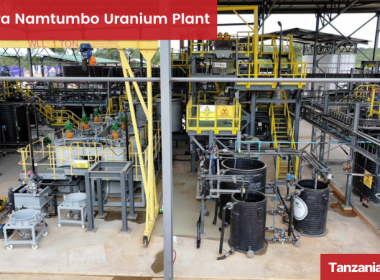
In 2023, one advanced uranium project in Namtumbo district was counted among the 11 advanced critical mineral projects ready for development[1].
The Mantra uranium project is also listed among the mining projects at advanced stages of development, alongside other flagship ventures such as the Kabanga and Dutwa nickel projects and the Ngualla rare earths project.
Together, these pipeline projects signal that Tanzania is transitioning from an exploration frontier to a jurisdiction capable of commercial uranium extraction.
The Mkuju River Project
The major uranium development project in Tanzania is the Mkuju River Project, valued at USD 1.2 billion, which represents the country's flagship uranium venture.
The project launched a pilot processing plant in 2025, marking the first operational milestone toward commercial-scale uranium output in Tanzania.
Full-scale operations at Mkuju River are expected between 2026 and 2029, at which point Tanzania will formally enter the ranks of uranium-producing nations.
The project is being led by Russian and Australian firms, reflecting the international capital and technical expertise required to bring uranium mining online.
Uranium in the Critical Minerals Agenda
Uranium is one of the critical minerals essential for high-tech and green technologies that Tanzania is actively developing.
The country is taking significant steps to develop its critical mineral resources, reflecting their growing importance in the global mining sector.
Tanzania is still in the early stages of harnessing these resources, and uranium sits within the broader group of strategic commodities under active exploration and project development.
Fiscal and Royalty Framework
Uranium attracts a gross royalty rate of 5% in Tanzania, which is distinct from the 6% applied to gold, metallic minerals, rough colored gemstones, and rough diamonds, and higher than the 3% rate applied to coal, industrial minerals, and building materials[2].
A 1% clearance and inspection fee applies to all minerals except salt and gold sold to refinery centres, and this fee applies to uranium as well.
The Finance Act of 2025 introduced an HIV Response Levy of 0.1% of the gross value of minerals, which likewise applies to uranium sales.
Local content obligations under the Mining Act of 2010 and the Mining (Local Content) Regulations of 2018, as amended in 2019, require mining companies to prioritise Tanzanian employment, goods, and services, with indigenous Tanzanian companies given priority in the supply of goods.
Investment Opportunities
The single largest near-term opportunity is exposure to the USD 1.2 billion Mkuju River Project as it transitions from its 2025 pilot processing plant to full-scale operations expected between 2026 and 2029.
With an estimated 160 million tonnes of uranium reserves and no current production, greenfield exploration and development opportunities exist across the southern Mkuju River corridor and the central Manyoni and Bahi belts.
The Namtumbo district uranium project, already counted among Tanzania's advanced critical mineral projects, offers a defined entry point for investors seeking to partner on an asset with demonstrated resource potential.
Supporting services such as processing technology, radiological safety, tailings management, specialised logistics, and downstream yellowcake handling all represent adjacent commercial opportunities as Tanzania's first uranium mines move toward commissioning.
The 5% royalty rate and structured local content framework provide fiscal predictability, while joint ventures between the Government and international investors, as already demonstrated by Russian and Australian partners at Mkuju River, remain a proven vehicle for market entry.
Last Update: May 2026
References
- https://eiti.org/sites/default/files/TEITI%2015TH%20EITI%20REPORT.pdf (Guide reference #147)
- https://www.tumemadini.go.tz/pages/mineral-royalties-and-inspection-fees-rates/ (Guide reference #157)
Want to know more about Uranium in Tanzania? Our free overview of the Tanzania Business and Investment Guide 2026 covers Uranium, plus key sectors and investment opportunities. The complete 141-page edition includes policies, taxation, key regulations, full macroeconomic data, and sources, and is also available at no cost upon completion of a short form.
Download Free OverviewGet the Full Edition for Free