



Tanzania Investment Agency Registers 201 Investment Projects Worth TZS 6.18 Trillion in Q3 2025 Mainly in Manufacturing, Construction and Transport with UAE as Lead Source of Capital

The Tanzania Investment and Special Zones Authority registered 201 projects worth 6.18 trillion shillings between July and September 2025. The projects were mainly in manufacturing, construction, and transport, with the United Arab Emirates, China, and India emerging as the leading sources of foreign investment capital.
Gilead Teri Tanzania TISEZA Investments FDI Q3 2025 July-September

The Tanzania Investment and Special Zones Authority (TISEZA) has registered 201 investment projects worth TZS 6.18 trillion between July and September 2025.

The projects are expected to generate over 20,800 jobs for Tanzanians and promote technological advancement, industrial growth, and a competitive economy geared towards sustainable national development.

Speaking at a press conference in Dar es Salaam, TISEZA Director General Gilead Teri said that the period recorded an increase in local investor participation.

Tanzania Investment Guide 2026 Free Edition

Out of the 201 projects, 74 were registered by local investors, representing 35% of the total, compared to 27% during the same period last year.

The main sectors that attracted the highest investments were manufacturing, commercial building construction, and transportation.

Teri added that the leading sources of capital investment during the period were the United Arab Emirates (UAE), China, and India, reflecting growing international confidence in Tanzania’s investment environment.

Dar es Salaam, Pwani, and Arusha regions recorded the highest number of projects, continuing to lead in attracting new investments.

Through its ongoing campaign to promote investment in Special Economic Zones (SEZs), TISEZA is offering opportunities to both local and foreign investors in 10 priority sectors, including automotive manufacturing, renewable energy products, electrical equipment, pharmaceuticals, and various industrial goods.

TanzaniaInvest Capital Markets Report Banner

Want to know more about the Economy in Tanzania? Our free overview of the Tanzania Business and Investment Guide 2026 covers the Economy, plus key sectors and investment opportunities. The complete 141-page edition includes policies, taxation, key regulations, full macroeconomic data, and sources, and is also available at no cost upon completion of a short form.

Download Free OverviewGet the Full Edition for Free

Related Posts
IMF World Economic Outlook 2026 Tanzania
Read More

Tanzania GDP to Grow 6.0% in 2026 and 5.9% in 2027 With Inflation at 4.0%, IMF Projects

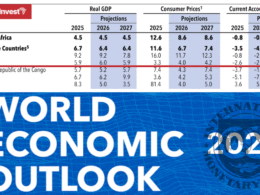
In its World Economic Outlook October 2026, the IMF projects Tanzania’s real GDP growth at 6.0% in 2026 and 5.9% in 2027, above the 4.5% sub-Saharan Africa average and Kenya’s 4.5%, while Uganda and Rwanda are projected at 6.2% and 7.4%. Tanzania’s inflation is projected at 4.0% in 2026 and 4.2% in 2027, below the 8.6% sub-Saharan Africa average and Kenya’s 6.0%.
Central Bank of Tanzania BOT CBR Interest Rate Q4 2026
Read More

BOT Maintains Tanzania Central Bank Rate at 6.25% for Q4 2026; GDP Growth Projected at 7.2% in Q4 2026, Driven by Agriculture, Construction, Mining, and Tourism

The Bank of Tanzania (BOT) released its Monetary Policy Report of October 2026, in which the Monetary Policy Committee (MPC) decided to maintain the Central Bank Rate (CBR) at 6.25% for the fourth quarter of 2026, allowing the July 2026 increase to fully transmit through the economy. The MPC will keep policy agile and flexible to limit risks to the inflation outlook from the Middle East conflict and potential El Niño-related disruptions, and keep inflation within the 3-5% target range.
Interview Jana Bricco IMF Resident Representative Tanzania no logo
Read More

Interview with Jana Bricco, New IMF Resident Representative in Tanzania, on Economic Growth, Private Investment, and Needed Reforms

In this exclusive interview with TanzaniaInvest, the new IMF Resident Representative Jana Bricco says Tanzania can sustain growth of around 6% by preserving macroeconomic stability and accelerating reforms supporting private investment, productivity and jobs. She calls for fewer regulatory obstacles, more predictable taxation, faster VAT refunds and better access to finance for businesses and SMEs, and explains how IMF support will evolve following the end of its financing programmes, with the relationship now focused on policy dialogue and capacity development.

