

On June 11, 2025, the World Bank approved $227 million in grants and credits to support Tanzania’s marine conservation and climate resilience efforts through two new national projects.
The Tanzania Scaling-Up Sustainable Marine Fisheries and Aquaculture Management Project (TAFSAM) will receive $117 million to improve marine resource management and boost economic opportunities, while the Scaling-Up Locally Led Climate Action Program (SCALE) will benefit from $110 million to increase climate resilience at both national and local levels.
TAFSAM is backed by a $112 million credit from the International Development Association (IDA) and a $5 million grant from the PROBLUE Multi-Donor Trust Fund.

It will target sustainable marine fisheries and aquaculture, a sector employing 430,000 people directly and supporting over 4.5 million through related activities such as fish processing and marketing.
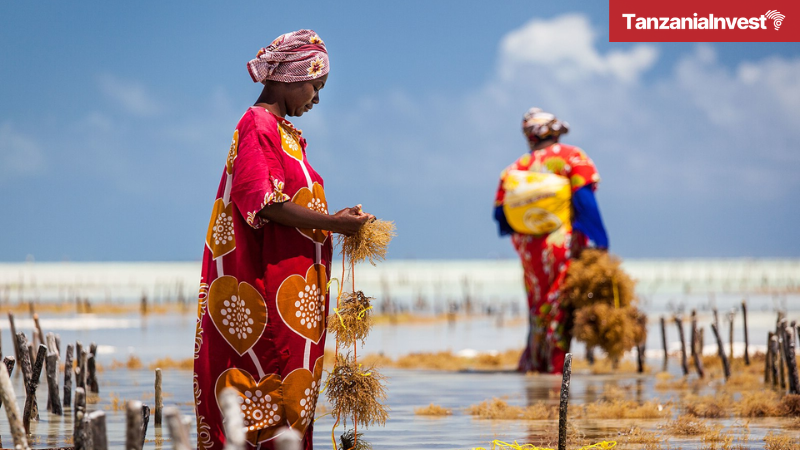
Seaweed farming—Zanzibar’s third-largest export—employs 25,000 people, 80% of them women.
However, overfishing and climate change threaten the sustainability of these resources, and TAFSAM aims to counteract these challenges by strengthening management practices and leveraging innovation.
SCALE, supported by a $100 million IDA credit and a $10 million grant from the Social Sustainability Initiative for All, will use a Program-for-Results (PforR) model, linking financing to measurable outcomes.
The program will focus on empowering district governments to develop and implement climate action plans, raise public awareness, and invest in community-driven priorities such as ecotourism, agroforestry, reforestation, and alternative energy.

Around 6.6 million Tanzanians—approximately 10% of the population—are expected to directly benefit from SCALE.
In addition to improving resilience, SCALE will support alternative livelihoods for communities around protected areas to promote conservation and sustainable development.
Nathan Belete, World Bank Country Director for Tanzania, Malawi, Zambia, and Zimbabwe, commented: “These two initiatives create a more holistic response to climate change—protecting both natural ecosystems and the people who depend on them.”
Tanzania is increasingly vulnerable to climate risks, with over 65 major natural disasters recorded in the past two decades, including floods, droughts, and cyclones.
These disasters have caused economic losses of about $170 million annually, with damages from recent events reaching $368 million and affecting over 200,000 people.
Dar es Salaam alone suffered $100 million in flood-related damages in 2018.
With droughts affecting 4.8 million people each year, the newly approved projects are expected to play a key role in reducing climate-related economic losses and enhancing community resilience.
Want to know more about the Economy in Tanzania? Our free overview of the Tanzania Business and Investment Guide 2026 covers the Economy, plus key sectors and investment opportunities. The complete 141-page edition includes policies, taxation, key regulations, full macroeconomic data, and sources, and is also available at no cost upon completion of a short form.
Download Free OverviewGet the Full Edition for Free