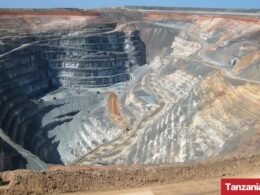



EcoGraf Limited (ASX: EGR) has completed an expansion study for the Epanko Graphite Mine expansion in Tanzania, outlining a staged production increase from 73,000 tonnes per annum (tpa) to 390,000 tpa over 10 years, while achieving a key financing milestone linked to a USD 105 million loan facility.
The expansion study confirms a four-stage development plan aimed at scaling natural flake graphite output at the Epanko Graphite Project, located in the Mahenge region.
Stage 1 targets production of 73,000 tpa, followed by Stage 2 involving duplication of the initial processing plant to increase output to 130,000 tpa.

Stage 3 is planned to expand production to 260,000 tpa, with Stage 4 targeting full production capacity of 390,000 tpa.
The study was conducted by independent consultants IMO Metallurgy and Metallurgist Services and is based on leveraging the existing Mineral Resource and shared infrastructure to optimize capital and operating costs.
The first 10 years of production are expected to be sourced exclusively from Measured and Indicated Mineral Resource tonnes, currently estimated at 88.0 million tonnes grading 7.6% Total Graphitic Carbon (TGC).
EcoGraf has also confirmed completion of the Independent Engineers’ Report (IER), which satisfies a key requirement for a senior secured loan facility of USD 105 million mandated to KfW IPEX-Bank.
An updated Bankable Feasibility Study (BFS) is currently being finalized and is expected to be delivered in February 2026.

The expanded production capacity is intended to supply feedstock for the company’s planned HFfree purification facilities located in lithium-ion battery manufacturing hubs in Europe and North America.
Engineering studies have confirmed that the Epanko valley can accommodate tailings volumes up to eight times the required storage capacity for the project.
Initial logistics are planned to involve flatbed trucks transporting bagged graphite approximately 70 km to Ifakara, with later stages expected to incorporate rail transport from Ifakara to the Port of Dar es Salaam.
EcoGraf has also commenced a USD 9.0 million gold farm-in agreement with AngloGold Ashanti plc (NYSE: AU) following the granting of Prospecting Licences for the Golden Eagle project by the Ministry of Minerals.
The company has consolidated its gold exploration assets under the Golden Frontier brand, identifying 21 prospective targets across Tanzania, including the Hazina prospect where early exploration returned a 4.45 grams per tonne gold rock chip sample.
EcoGraf Managing Director Andrew Spinks stated that discussions with KfW IPEX-Bank in Frankfurt focused on additional development financing options to support the project and surrounding communities.
The company has appointed John Ciganek as General Manager Corporate Development to support funding, offtake negotiations, and strategic partnerships as the project advances towards construction.
Epanko Graphite Project
The Epanko Graphite Project is being developed under EcoGraf’s TanzGraphite business unit and forms part of a vertically integrated supply chain strategy.
The integrated model includes the Epanko Mine as the upstream operation, a mechanical shaping facility planned in Tanzania as the midstream component, and downstream HFfree purification facilities designed to produce 99.95%C battery-grade graphite anode material.
EcoGraf’s proprietary HFfree purification technology is designed to reduce forecast operating costs by 25%, with estimated operating costs of USD 478 per tonne and a 34% cost advantage compared to conventional hydrofluoric acid purification methods.
Want to know more about Mining in Tanzania? Our free overview of the Tanzania Business and Investment Guide 2026 covers Mining, plus key sectors and investment opportunities. The complete 141-page edition includes policies, taxation, key regulations, full macroeconomic data, and sources, and is also available at no cost upon completion of a short form.
Download Free OverviewGet the Full Edition for Free