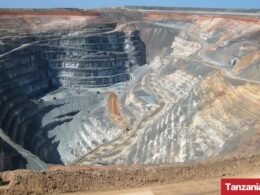
Mozambi Resources Limited (ASX:MOZ), an Australia-based company involved with the exploration and development of graphite projects in East Africa, has recently announced the largest discovery of graphite at its Namangale project in Tanzania’s southern region with 179 million tonnes at 5.1% estimated grade of inferred resources according to the Joint Ore Reserves Committee (JORC) code.
The results were obtained from an analysis undertook by ROM Resources, an independent consultancy firm, over the results of 82 reverse circulation drilling (RC drilling) holes and 9 diamond holes with a maximum depth of 100 metres across the company’s prospect areas.
These results have outstood any expectation from the prospecting area and the excellent coarse flake size graphite together with Mozambi’s infrastructure ensures the future of the Nagamale graphite project, said Mozambi Chairman Stephen Hunt.

Namanagale graphite currently accounts with three prospect areas that have return the highest results with Namangale 1 accounting for most of the inferred resources totaling 161.6 million tonnes at 5.1% grade followed by Namangale 2 with 16.8 million tonnes at 5.4% grade and Namangale 3 with 1.6 million tonnes at 5.3% grade.
With the findings, Namangale tops the list of graphite fields in Tanzania followed by Nachu graphite project managed by Magnis Resources with 156 million tonnes at 5.2% grade and Epanko and Merelani-Arusha graphite projects managed by Kibaran resources with 10.9 million tonnes at 8.6% and 17.2 million tonnes at 6.5% respectively.
According to Tanzania’s Ministry of Energy and Minerals (MEM), the country would soon become the biggest producer of graphite in the world if the three companies start production in the short-term, since some high-volume deals are being prepared to sign with Chinese investors.
Tanzania has so far signed agreements to export 20,000 tonnes of graphite per annum from the Epanko project to a German company whose name has not been disclosed yet.
Currently, Zimbabwe is the only African country located in the global top ten producers of graphite with an annual production of 6,000 tonnes per annum with China topping the list with a production of 780,000 tonnes per annum according to Maps of World.

Want to know more about Mining in Tanzania? Our free overview of the Tanzania Business and Investment Guide 2026 covers Mining, plus key sectors and investment opportunities. The complete 141-page edition includes policies, taxation, key regulations, full macroeconomic data, and sources, and is also available at no cost upon completion of a short form.
Download Free OverviewGet the Full Edition for Free