


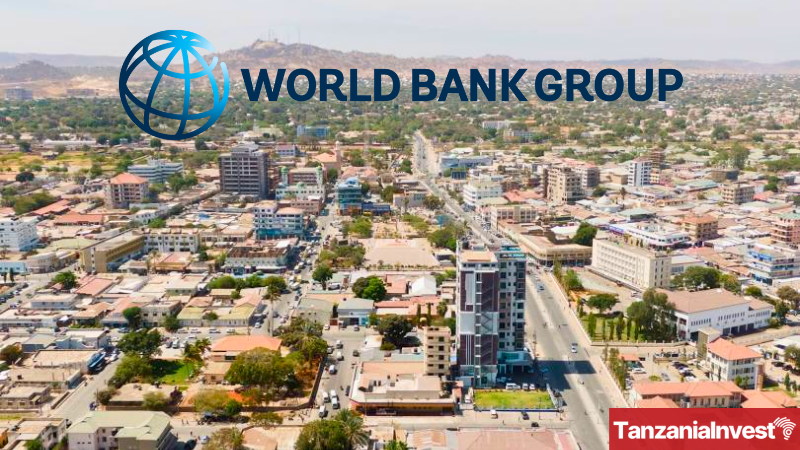
The World Bank has approved a $200 million investment to enhance urban mobility and accessibility in Tanzania’s capital, Dodoma.
The Dodoma Integrated and Sustainable Transport (DIST) project, financed by the World Bank’s International Development Association (IDA), will focus on upgrading key transport corridors, improving access routes, enhancing the central business district (CBD), and developing walking and cycling infrastructure.
The project is expected to benefit more than 430,000 residents, including 222,000 women and 81,700 youth, and aims to unlock economic opportunities, create over 10,000 jobs by 2030, and boost the city’s economic output by 2%.

It will also support 750 public transport drivers and others in the sector, ensuring a more efficient and sustainable transport system for Dodoma’s rapidly growing population.
The DIST project comprises three main components. The Strategic Multimodal Corridors component will improve infrastructure and public transport services on key mobility corridors. The Improved Access component will enhance local neighborhood and CBD roads, including pedestrian, cycling, and public transport infrastructure. The Institutional Enabling Environment and Capacity Building component will establish a transport coordination mechanism to align efforts among key stakeholders, such as the Tanzania National Roads Agency (TANROADS), the Tanzania Rural and Urban Roads Agency (TARURA), the City Council of Dodoma (CCD), and the Land Transport Regulatory Authority (LATRA).
Nathan Belete, World Bank Division Director for Malawi, Tanzania, Zambia, and Zimbabwe, emphasized the importance of the project, stating, “Dodoma’s rapid expansion since 2016 presents both opportunities and challenges. As the city grows, ensuring access to safe and efficient transport is critical to sustaining its economic momentum and improving the quality of life for its residents. This project will help Dodoma grow in a more sustainable way, ensuring that infrastructure keeps pace with the city’s ambitions.”
For his part, Adam Diehl, World Bank Senior Transport Specialist and Task Team Leader, stated, “Addressing urban mobility challenges early on is critical to ensuring sustainable and inclusive growth of the new capital city and avoiding uncoordinated growth and sprawl. We are proud to be part of this integrated approach by the Government of Tanzania, and hope Dodoma can serve as a model of collaborative planning for other rapidly growing cities across the country and the continent.”
Dodoma has experienced significant growth since the Tanzanian government renewed its commitment in 2016 to transfer the national capital from Dar es Salaam to Dodoma, a decision originally made in 1973. This move has led to substantial capital investments and the relocation of government agencies, fueling rapid population growth.

By 2022, the city’s population had reached 765,179, growing at an annual rate of 6.4%. However, this expansion has strained the city’s infrastructure, with the built-up area increasing by over 440% since 2000, from 11 km² to 60 km² in 2024.
The preparation of the DIST project has also benefited from support from various global initiatives, including the Global Smart City Partnership Program, the Public-Private Infrastructure Advisory Facility, the Korea Green Growth Trust Fund, the Global Facility for Disaster Risk Reduction and Recovery (GFDRR), and the Japan-World Bank Program for Mainstreaming Disaster Risk Management in Developing Countries.
Want to know more about Transport in Tanzania? Our free overview of the Tanzania Business and Investment Guide 2026 covers Transport, plus key sectors and investment opportunities. The complete 141-page edition includes policies, taxation, key regulations, full macroeconomic data, and sources, and is also available at no cost upon completion of a short form.
Download Free OverviewGet the Full Edition for Free