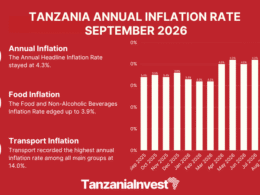



The National Bureau of Statistics of Tanzania (NBS) indicates that the Annual Headline Inflation Rate for the month of January 2020 decreased to 3.7% from 3.8% recorded in December 2019.
The overall index went up to 117.60 in January 2020 from 113.38 recorded in January 2019.
Food and Non-Food Inflation Rates
Food and Non-Alcoholic Beverages Inflation Rate for the month of January 2020 has decreased to 5.7% from 6.3% recorded in December 2019.

Annual Inflation Rate for food consumed at home and away from home for the month of January 2020 has also decreased to 6.4% from 6.9% recorded in December 2019.
On the other hand, the 12-month index change for non-food products in January 2020 has slightly increased to 2.4% from 2.3% recorded in December 2019.
Inflation Rate Excluding Food and Energy
The Annual Inflation Rate which excludes food and energy for the month of January 2020 has stagnated at 2.1% as it was recorded in December 2019.
Monthly Headline Inflation Rate
The National Consumer Price Index from December 2019 to January 2020 has increased by 0.4% compared to an increase of 0.6% recorded from November 2019 to December 2019.

The overall index has increased to 117.60 in January 2020 from 117.10 recorded in December 2019.
The increase of the overall index is attributed to the price increase for food and non food items. Some of the food items that contributed to such an increase include: fish by 1.7%, vegetables by 4.1%, beans by 2.2%, cassava by 2.4% and cooking bananas by 1.7%.
On the other hand, some of the non food items that contributed to such an increase include: actual rentals paid by tenants by 2.3%, petrol by 1.4%, and school fee for private primary and secondary schools by 1.9% and 1.8% respectively.
Want to know more about the Economy in Tanzania? Our free overview of the Tanzania Business and Investment Guide 2026 covers the Economy, plus key sectors and investment opportunities. The complete 141-page edition includes policies, taxation, key regulations, full macroeconomic data, and sources, and is also available at no cost upon completion of a short form.
Download Free OverviewGet the Full Edition for Free