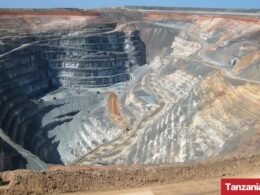

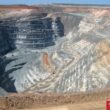

Barrick Gold Corporation (NYSE:GOLD)(TSX:ABX) recently announced that it would spend USD 6 for every ounce of gold sold by its two mines in Tanzania to improve healthcare, education, infrastructure, and access to potable water in the communities around them.
The mining company has also committed up to USD 70 million for investment in value-adding national projects, including mining-related training, skills development and scientific facilities at Tanzanian universities, as well as road infrastructure.
This is in accordance with the conditions underlying Barrick’s framework agreement with the government, which included the establishment of their Twiga joint venture. Twiga oversees a 50/50 split of the economic benefits generated by the mines as well as their management.

Barrick president and chief executive Mark Bristow said that the investment program was the latest evolution of the company’s very successful partnership with the government.
“Since we took over the Tanzanian mines from their previous operator in 2019, we have rebuilt relations with the state and renewed our social licence to operate here. The North Mara mine has been redesigned as an integrated underground/open pit mine and the Bulyanhulu mine has been resuscitated as a long-life underground mine. Together they are expected to produce more than 500,000 ounces1 of gold per year at the lower end of the cost spectrum,” he said.
Barrick has spent more than USD 1.9 billion in taxes, salaries and payments to local businesses over the past two years. At least 73% of the mines’ goods and services are sourced locally and they give preference to the employment of Tanzanian nationals.
Barrick has to date also paid the government USD 140 million of the USD 300 million settlement included in the framework agreement
Tanzania Gold
Tanzania’s gold reserves are estimated at about 45 million ounces.

Gold exploration has been centered mostly on the greenstone belts around Lake Victoria, where several large deposits have already been discovered and are being developed.
Tanzania’s gold production increased by more than 700% over the past 25 years, from 5 to 40-50 tonnes per year, while South Africa’s production of gold decreased from over 500 tonnes in 1990 to 117 tonnes in 2018.
Want to know more about Mining in Tanzania? Our free overview of the Tanzania Business and Investment Guide 2026 covers Mining, plus key sectors and investment opportunities. The complete 141-page edition includes policies, taxation, key regulations, full macroeconomic data, and sources, and is also available at no cost upon completion of a short form.
Download Free OverviewGet the Full Edition for Free