
The Ministry of Energy of Tanzania January Makamba called on investors to participate in the development of the country’s power production and take advantage of the growing demand for electricity and the improved business environment.
Minister Makamba made the call in his welcoming remarks at the 4th Tanzania Energy Cooperation Summit organized by EnergyNet that is taking place in Dar es Salaam from 1st to 3rd February 2023.
He explained that the effort undertaken by President Samia Suluhu Hassan to open up the country to investors had created the need to boost energy generation to meet the current and anticipated rise in demand.

“The energy sector is now more capital-hungry than ever, we have a higher desire for capital and we invite more from the private sector to fill the power supply gap in Tanzania”, he said.
He reminded the audience that the current installed power capacity of the country of 62 million is just 1.7GW and that the current Five-Year National Development Plan 2021/22 – 2025/26 plan aims at 5.7GW by 2025, and the 4GW gap represents a great opportunity for investors.
He also stressed that the business environment has improved significantly and that the government is committed to providing a conducive environment for long-term partnerships.
For his part, the Commissioner for the National Planning Department at the Ministry of Energy Mursali Milanzi indicated the total value of the government’s planned power-generating projects from fossil and renewable resources as per the Plan is TZS 89 trillion (USD 39 billion), and that the Government expects at least 78% of the investment required to come from private capitals, while it is funding the remaining.
The first day of the event saw the participation of high-profile high-level representatives from the European Union, USA, Germany, Japan, and the UK, who all shared the Minister’s view that Tanzania is again open for business.

Tanzania has abundant energy resources such as hydropower, natural gas, coal, uranium, wind, geothermal, biomass, solar, tidal, and wave.
Tanzania’s electricity generation comes mostly from natural gas (48%), followed by hydropower (31%), petrol (18%), solar (1%), and biofuels (1%).
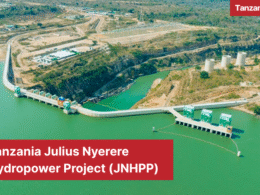
In December 2022, President Hon. Samia Suluhu Hassan graced the water filling of the new Julius Nyerere hydropower dam (JNHPP).
Located 220 km (137 mi), by road, southwest of Tanzania’s commercial capital Dar es Salaam, the JNHPP is planned to have an installed capacity of 2,115MW when completed and be able to produce 5,920GWh of power annually.
It is the largest hydropower plant in East Africa, the fourth-largest in Africa, and the ninth-largest in the world.
Want to know more about Energy in Tanzania? Our free overview of the Tanzania Business and Investment Guide 2026 covers Energy, plus key sectors and investment opportunities. The complete 141-page edition includes policies, taxation, key regulations, full macroeconomic data, and sources, and is also available at no cost upon completion of a short form.
Download Free OverviewGet the Full Edition for Free