Download Free Overview Get the Full 141-Page Edition for Free
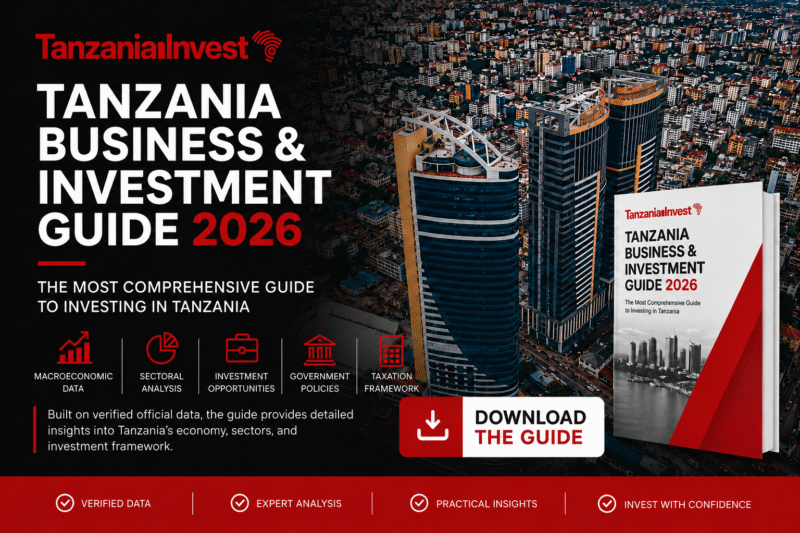
TanzaniaInvest, the leading platform for investors and businesses in Tanzania and official partner of the Tanzania Investment and Special Economic Zones Authority (TISEZA), publishes the Tanzania Business & Investment Guide 2026: a 141-page, non-AI-generated reference built on 200+ verified official sources, available as a free overview and as a complete full edition.
The free overview covers Tanzania’s geography, people, governance, and economy; the investment case including natural resources, economic growth, population, labor, strategic location, and infrastructure; and sector-by-sector investment opportunities across agriculture, construction, real estate, water, energy, finance, manufacturing, mining, telecoms, tourism, forestry, and transport, alongside key contacts and government agencies for investors.
The complete 141-page edition adds the national development strategy through to 2050, full macroeconomic indicators, country risk and sovereign credit ratings, sector-by-sector policies and regulations, the business environment and taxation framework, including PPP, land acquisition, business registration, and work and residency permits, as well as the full list of the sources used.
Designed for investors, corporate development teams, financial institutions, and analysts, the guide is structured to support every stage of market entry, from initial due diligence and opportunity screening to on-the-ground operational planning and compliance.
Want the full 141-page edition for free?
Just fill in this short form and you get it. No payment, two minutes.
Download Free Overview Get the Full 141-Page Edition for Free
Our Sponsors
The materialization of the Guide has been made possible by the support of our esteemed partners and sponsors—leading institutions that play a crucial role in Tanzania’s economy and dynamism, driving growth across key sectors such as trade, industrialization, agriculture, and financial markets.
These include the Tanzania Investment and Special Economic Zones Authority (TISEZA), the national investment facilitation agency and one-stop center for investors, both domestic and international; the Tanzania Trade Development Authority (TanTrade), responsible for promoting trade and facilitating business development; the National Development Corporation (NDC), the leading government institution for industrial development; the GF Group, comprising GF Trucks & Equipment, Tanzania’s leading commercial vehicles and construction equipment provider, and GF Vehicle Assemblers, the country’s first modern assembly plant for heavy-duty trucks, tippers, and trailers; the Dar es Salaam Stock Exchange (DSE), the national securities exchange; SanlamAllianz, Tanzania’s and Africa’s largest insurance and non-banking financial services group; the Private Agricultural Sector Support Trust (PASS), the country’s leading agri-finance development institution; and UTT AMIS, Tanzania’s largest fund manager of collective investment schemes.
Download Free Overview Get the Full 141-Page Edition for Free
Table of Contents
INTRODUCTORY SECTIONS
- EDITOR’S NOTE & ACKNOWLEDGEMENTS
- EXECUTIVE SUMMARY
CHAPTER 1: ABOUT TANZANIA
- GEOGRAPHY AND CLIMATE
- PEOPLE AND CULTURE
- POLITICAL SYSTEM AND GOVERNANCE
- ECONOMIC OVERVIEW
CHAPTER 2: WHY INVEST IN TANZANIA
- ABUNDANCE OF NATURAL RESOURCES AND OPPORTUNITIES
- STABILITY AND ECONOMIC GROWTH
- POPULATION GROWTH AND MARKET SIZE
- AFFORDABLE LABOR
- STRATEGIC LOCATION
- INFRASTRUCTURE DEVELOPMENT
- INVESTMENT INCENTIVES
CHAPTER 3: NATIONAL DEVELOPMENT VISION AND STRATEGY 🔒 Full Edition
- TANZANIA VISION 2025
- VISION 2050
- NATIONAL DEVELOPMENT PLAN 2025/26
- NATIONAL BUDGET 2025/26
- LONG-TERM PERSPECTIVE PLAN 2026/27-2050/51
- FIVE-YEAR DEVELOPMENT PLAN 2026/27-2030/31
- NATIONAL DEVELOPMENT PLAN 2026/27
- SOVEREIGN PRAGMATISM
- SUSTAINABLE DEVELOPMENT GOALS
CHAPTER 4: MACROECONOMIC INDICATORS 🔒 Full Edition
- GDP
- INFLATION
- MONETARY POLICY AND INTEREST RATES
- EXCHANGE RATE AND FOREIGN RESERVES
- FISCAL PERFORMANCE, GOVERNMENT EXPENDITURE, PUBLIC DEBT
- TRADE BALANCE AND EXPORT PERFORMANCE
- FOREIGN DIRECT INVESTMENT (FDI)
- EMPLOYMENT AND LABOR MARKET
- FINANCIAL SECTOR STABILITY
CHAPTER 5: COUNTRY RISK & INTERNATIONAL CREDIT RATINGS 🔒 Full Edition
- MACROECONOMIC STABILITY & FISCAL STRENGTH
- GOVERNANCE, RULE OF LAW, JUDICIAL INDEPENDENCE
- EXPROPRIATION RISKS AND CONTRACT CANCELLATION
- SOVEREIGN CREDIT RATINGS
CHAPTER 6: SECTORAL PERFORMANCE, POLICIES, AND INVESTMENT OPPORTUNITIES
- AGRICULTURE, LIVESTOCK & FISHERIES
- Policies 🔒 Full Edition
- CONSTRUCTION, REAL ESTATE, WATER
- Policies 🔒 Full Edition
- ENERGY (OIL & GAS, POWER GENERATION, RENEWABLES)
- Policies 🔒 Full Edition
- FINANCE: BANKING, CAPITAL MARKETS, INSURANCE
- Policies 🔒 Full Edition
- MANUFACTURING & TRADE
- Policies 🔒 Full Edition
- MINING
- Policies 🔒 Full Edition
- TELECOMS
- Policies 🔒 Full Edition
- TOURISM & FORESTRY
- Policies 🔒 Full Edition
- TRANSPORT
- Policies 🔒 Full Edition
CHAPTER 7: BUSINESS ENVIRONMENT & REGULATIONS
- POLICY REFORMS AND GOVERNMENT INITIATIVES
- BUSINESS ENVIRONMENT EVALUATIONS AND RANKINGS Policies 🔒 Full Edition
- REGULATORY FRAMEWORK AND LEGAL GUARANTEES
- INVESTORS’ PROTECTION
- INVESTMENT INCENTIVES
- PPP FRAMEWORK 🔒 Full Edition
- TAXATION 🔒 Full Edition
- BUSINESS REGISTRATION & LICENSING 🔒 Full Edition
- WORK AND RESIDENCY PERMITS 🔒 Full Edition
- LAND ACQUISITION Policies 🔒 Full Edition
APPENDIX: KEY GOVERNMENT AGENCIES & PRIVATE ORGANIZATIONS 🔒 Full Edition
TanzaniaInvest is preparing an update of its Tanzania Investment Guide, to be released in Q4 2026, with the latest macroeconomic indicators by the Bank of Tanzania and sector performance figures released in the new Ministerial Budgets 2026-2027.
For more details about the updated Guide and advertising opportunities, watch this video, and contact us at info@tanzaniainvest.com.
Download Free Overview Get the Full 141-Page Edition for Free
Want to know more about the Economy in Tanzania? Our free overview of the Tanzania Business and Investment Guide 2026 covers the Economy, plus key sectors and investment opportunities. The complete 141-page edition includes policies, taxation, key regulations, full macroeconomic data, and sources, and is also available at no cost upon completion of a short form.
Download Free OverviewGet the Full Edition for Free