


Tanzania has outlined eight financial sector priorities—from climate finance and Islamic banking to digital asset regulation and SME capital access—to sustain the sector’s 14.8% growth and reach its USD 1 trillion Vision 2050 target.
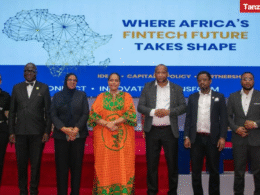
Finance Minister Ambassador Khamis Mussa Omar announced the priorities on 9 April 2026 at the Second Financial Sector Stakeholders Forum in Dar es Salaam, convened under the theme “An innovative and responsible financial sector for sustainable and inclusive socio-economic development.”
The forum brought together banks, insurers, capital markets institutions, regulators, fintech firms, and other industry players to review progress under the Financial Sector Development Master Plan 2020/21–2029/30 and generate policy recommendations for the next phase of reforms.

The eight priority areas outlined by Minister Omar are: 1) climate finance and green financing, 2) Islamic financial services—encompassing Islamic banking, takaful insurance, and Sharia-compliant capital market instruments, 3) regulation of digital financial assets including cryptocurrencies, blockchain, and online forex trading, 4) access to capital for start-ups and small businesses, 5) financial literacy, 6) consumer protection, 7) risk reduction in lending, and 8) strengthening anti-money laundering (AML) and counter-terrorism financing (CTF) frameworks in line with regional and international obligations.
Omar noted that Tanzania’s economy grew by an estimated 5.9% in 2025, up from 5.5% in 2024, while the financial and insurance sub-sector expanded by 14.8%, making it the second-fastest growing segment of the economy after electricity generation.
The minister said climate finance and green financing present significant opportunities that Tanzania must position itself to capture, and stressed the growing importance of non-interest financial services, which he described as an area of expanding demand.
On digital finance, Omar confirmed that a national digital finance committee is already reviewing emerging issues across cryptocurrencies, blockchain technology, and cross-border digital financial services, and is preparing new legislation to regulate virtual assets and related activities.
He called for the expansion of venture capital, private equity, and other financing mechanisms to improve access to capital for youth and women entrepreneurs, start-ups, and small businesses, noting that financial education and tailored products for low-income groups are essential to reduce reliance on informal and often exploitative lending practices.

The forum also presented a five-year implementation update of the Financial Sector Development Master Plan 2020/21–2029/30, revealing substantial gains across banking access, lending, capital markets, and insurance.
Dr. Natu El-Maamry Mwamba, Permanent Secretary in the Ministry of Finance, reported that banking agents increased to 145,450 in 2024 from 40,410 in 2020, while bank branches grew to 1,027 from 969, with 30 banks now operating through agency and digital channels.
The usage of financial services also rose significantly, climbing from an average of 16–23% in 2020 to 26–27% in 2024, reflecting improved financial inclusion and growing public trust in formal financial systems.
Microfinance providers had disbursed TZS 1.37 trillion in loans by December 2025, while cooperative societies extended TZS 1.6 trillion over the same period.
In the capital markets, the number of licensed intermediaries and investment advisers rose to 251 in 2025 from 144 in 2020, and the value of collective investment schemes grew more than ninefold to TZS 4.4 trillion from TZS 476.9 billion.
Insurance sales nearly doubled over the five-year period, reaching TZS 1.516 trillion in 2025 from TZS 824 billion in 2020.
The forum also marked the launch of two new insurance strategies: the National Inclusive Insurance Strategy 2025–2030 (NIIS) and the National Insurance Market Research, Innovation and Development Strategy 2025–2030 (RIDeS).
Insurance Commissioner Dr. Baghayo Saqware explained that the NIIS aims to increase access to insurance services in key sectors including agriculture, livestock, fisheries, mining, and forestry, and to expand financial inclusion in insurance services.
The RIDeS aims to increase innovation, efficiency, and growth in the insurance sector.
Dr. Saqware said the Tanzania Insurance Regulatory Authority (TIRA) has completed both strategic plans to strengthen insurance coverage and expand data-driven decision-making, with a target to raise the insurance sector’s contribution to GDP from 22% to 30%.
He also emphasized that digital platforms, including mobile financial services and electronic payments, are critical pillars in ensuring that financial services remain secure, sustainable, and widely accessible, and that the government is committed to continued investment in technology and collaboration with the private sector to drive the growth of the digital economy.
Tanzania’s Financial Sector Development Master Plan
The Financial Sector Development Master Plan 2020/21–2029/30 is a decade-long reform programme developed by the Ministry of Finance of Tanzania (MoF) to increase access to inclusive financial services, strengthen consumer protection, enhance sector stability, and create an enabling policy and regulatory environment.
The plan is closely linked to Tanzania’s Development Vision 2050, which aims to transform the country into a middle-income economy with a GDP of USD 1 trillion, up from approximately USD 100 billion currently.
The private sector is expected to shoulder the majority of long-term investment requirements through domestic capital, foreign direct investment, and public-private partnerships, making the financial sector’s capacity to mobilize resources a central pillar of the national development strategy.
Want to know more about Finance in Tanzania? Our free overview of the Tanzania Business and Investment Guide 2026 covers Finance, plus key sectors and investment opportunities. The complete 141-page edition includes policies, taxation, key regulations, full macroeconomic data, and sources, and is also available at no cost upon completion of a short form.
Download Free OverviewGet the Full Edition for Free