


Tanzania is expected to begin implementing the Liganga and Mchuchuma integrated iron ore, coal, and steel projects within the next three months after negotiations between the government and the investor reached more than 90%, paving the way for the start of one of the country’s largest mining and industrial developments after decades of delays.
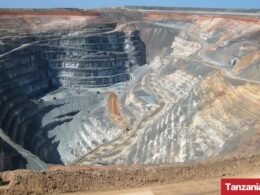
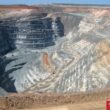
The two projects, located in Njombe Region, are expected to attract between US$ 2 billion and US$ 3 billion in investment and will combine iron ore mining at Liganga, coal mining at Mchuchuma, and downstream steel production.
The announcement was made on May 9, 2026, by Gerson Msigwa, who said the government is in the final stages of negotiations with the investor and expects implementation to begin within three months.

He said the projects are expected to produce 2.9 million tons of crude steel per year and 1.1 million tons of steel products annually.
The developments are also projected to create more than 6,500 formal jobs and around 26,000 informal jobs, while supporting local industries linked to mining, manufacturing and infrastructure.
According to Msigwa, the projects are expected to generate a total of US$ 1.9 billion during the first 25 years of operation.
He said projected revenue from the coal project is estimated at US$ 92 million, while iron ore mining is expected to generate US$ 910 million, and steel production US$ 987,114.
The integrated development will also include supporting infrastructure such as a 220kV transmission line between Mchuchuma and Liganga, a road linking the two sites, a coal mine with annual production capacity of 3 million tons and a 600 megawatt power plant.

Msigwa said the government has already paid more than TZS 15 billion in compensation to affected residents to facilitate implementation.
“The move demonstrates the Government’s commitment to ensuring that the project begins in practice after a long wait,” he said.
The projects have been identified among flagship investments under Tanzania’s Development Vision 2050, which aims to support the country’s long-term industrialization and economic expansion.
Liganga and Mchuchuma Projects
The Liganga and Mchuchuma projects are integrated mining and industrial developments in Ludewa District, Njombe Region, designed to exploit Tanzania’s iron ore and coal deposits for domestic steel production.
Liganga contains one of Tanzania’s largest known iron ore deposits, while Mchuchuma hosts large coal reserves intended to supply both the mining operations and the planned steel complex.
The projects are being developed and implemented by Tanzania China International Mineral Resources Limited (TCIMRL), a Joint Venture Company (JVC) between the Government through NDC (20% non-cash) and Sichuan Hongda Group from China (80%).
Implementation stalled for years due to financing constraints, infrastructure requirements, and negotiations over revised investment terms.
Want to know more about Mining in Tanzania? Our free overview of the Tanzania Business and Investment Guide 2026 covers Mining, plus key sectors and investment opportunities. The complete 141-page edition includes policies, taxation, key regulations, full macroeconomic data, and sources, and is also available at no cost upon completion of a short form.
Download Free OverviewGet the Full Edition for Free