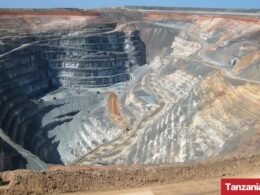




The Government of Tanzania has cancelled 40 mineral exploration licenses covering an area equivalent to 188,163 acres after determining that the holders failed to comply with development and regulatory requirements, as part of a broader enforcement action targeting inactive mining rights across the country.
The decision was announced on April 15, 2026 in Dodoma by the Minister for Minerals, Anthony Mavunde, who said the cancellations followed repeated non-compliance by license holders despite prior warnings and opportunities to rectify identified violations.
He said the affected licenses will be returned to the government and reallocated through structured mechanisms targeting small-scale miners, qualified investors, and groups under the Mining for A Brighter Tomorrow (MBT) programme, including women, youth and persons with disabilities.

The government said a detailed review by the Mining Commission identified several breaches, including failure to develop licensed areas, non-payment of statutory fees, lack of compliance with local content requirements, and failure to implement corporate social responsibility obligations.
Mavunde said some license holders were effectively hoarding mineral-rich areas without making investments, a practice he said was no longer acceptable under current mining sector policy.
“These 40 licenses are equivalent to about 900 square kilometers, and the holders have not demonstrated meaningful development of the areas despite being given notices to correct the situation,” he said.
The Ministry of Minerals added that license inactivity has contributed to rising conflicts in mining areas, including the growth of illegal mining activities and pressure on government oversight systems.
In a related move, the government has issued notices of violation to holders of an additional 43 licenses, including 40 exploration licenses and three medium-scale mining licenses, giving them 30 days to correct compliance deficiencies.

Failure to comply within the deadline will result in cancellation and reallocation of the affected areas to new operators capable of developing them.
Mavunde also warned against increasing cases of illegal entry into licensed mining areas, particularly in regions experiencing mineral discoveries and informal rushes.
He said unauthorized mining activities are illegal and have led to conflicts between legal license holders and informal miners, as well as environmental degradation and public safety risks.
The government said enforcement measures are being strengthened to protect licensed areas, improve resource governance, and reduce disputes linked to mineral access and ownership.
Mining License Management in Tanzania
Tanzania’s mining regulatory framework requires exploration and mining license holders to meet development, reporting, and compliance obligations within defined timelines to prevent speculation and underutilization of mineral resources.
The Mining Commission oversees licensing, compliance monitoring, and enforcement, including cancellation of rights that are not actively developed or that breach statutory requirements.
The cancellation of inactive licenses forms part of a broader government strategy to improve efficiency in the allocation of mineral resources and expand participation in the sector through small-scale miners, domestic investors, and targeted inclusion programmes such as MBT.
Want to know more about Mining in Tanzania? Our free overview of the Tanzania Business and Investment Guide 2026 covers Mining, plus key sectors and investment opportunities. The complete 141-page edition includes policies, taxation, key regulations, full macroeconomic data, and sources, and is also available at no cost upon completion of a short form.
Download Free OverviewGet the Full Edition for Free