Fitch Revises Tanzania Outlook to Positive, Affirms ‘B+’ Rating, Forecasts GDP Growth of 5.8% in 2026 Driven by Tourism and Mining

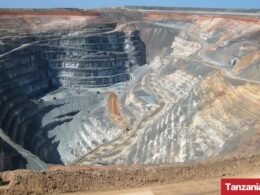
Fitch Ratings revised Tanzania’s outlook to positive from stable while affirming the sovereign rating at ‘B+’, citing strengthening reserves and a gradual decline in government debt, warning, however, that the credit rating remains constrained by weak governance and low government revenue. The agency forecasts real GDP growth of 5.8% in 2026 and an average of 6.1% in 2027 and 2028, driven by public investment, tourism, the country’s role as a regional logistics hub, and expansion in the mining sector.
Tanzania Fitch Ratings

Fitch Ratings has revised Tanzania’s long-term foreign- and local-currency issuer default ratings (IDR) outlook to positive from stable while affirming the country’s rating at ‘B+’.

According to the rating company, the positive outlook reflects expectations of strengthening international reserves, moderate fiscal deficits, and continued economic growth, which together would support a gradual decline in government debt.

Fitch forecasts Tanzania’s real gross domestic product (GDP) growth at 5.8% in 2026 and an average of 6.1% in 2027 to 2028.

Tanzania Investment Guide 2026 Free Edition

The agency attributed the growth outlook to public investment, tourism, the country’s role as a regional logistics hub, and expansion in the mining sector.

Fitch also noted improvements in Tanzania’s macroeconomic policy framework since 2023, including measures to strengthen central bank independence, exchange-rate flexibility and foreign-exchange management.

The agency warned, however, that Tanzania’s credit rating remains constrained by weak governance and low government revenue compared with B-rated peers.

It added that the macroeconomic policy framework, despite recent improvements, still needs to demonstrate greater resilience to external shocks.

Fitch Ratings has maintained Tanzania’s sovereign credit rating at ‘B+’ through several consecutive reviews, most recently reaffirming the Long-Term Foreign-Currency IDR at ‘B+’ with a stable outlook on 13 June 2025.

TanzaniaInvest Capital Markets Report Banner

The agency has repeatedly flagged the same structural constraints, including liquidity management issues, foreign-exchange market distortions and persistent dollarisation, despite IMF-supported reforms such as a shift to interest-rate targeting and foreign-exchange policy changes.

Want to know more about the Economy in Tanzania? Our free overview of the Tanzania Business and Investment Guide 2026 covers the Economy, plus key sectors and investment opportunities. The complete 141-page edition includes policies, taxation, key regulations, full macroeconomic data, and sources, and is also available at no cost upon completion of a short form.

Download Free OverviewGet the Full Edition for Free

Related Posts
EU-Tanzania Roadshow 2026 APM Terminals at Maasvlakte Rotterdam
Read More

EU–Tanzania Roadshow Ends With Rotterdam and Antwerp Port Visits as Tanzania Pitches Port, Rail and Logistics Opportunities to European Companies

The EU-Tanzania roadshow ended in Antwerp on 6 October 2026 after port visits in Rotterdam, with Tanzania's port and rail authorities pitching openings for terminal operators, EPC contractors, private rail operators and digital rolling stock tracking, while rail operator Vecturis, minerals logistics group Polytra, heavy lifting company Sarens and marine data company GEOxyz outlined their plans in Tanzania. The EU said it will join the World Bank and the EIB, which has a formal financing request, in supporting the Dar es Salaam port expansion, and offered Global Gateway guarantees, equity and feasibility funding for company projects screened by member states.
EU-Tanzania Roadshow 2026 The Hague day 1 opening Mkumbo
Read More

EU–Tanzania Roadshow Reaches The Hague With Coffee, Cashew, Critical Minerals, and Port Investment Pitches

The EU-Tanzania roadshow reached The Hague on 5 October 2026 for its final leg, where Tanzania pitched coffee and cashew processing, wheat and edible oils, critical minerals, the new Bagamoyo and Mwambani ports on the mainland, Zanzibar's Mangapwani port hub, four dry ports, and two new lines of the standard gauge railway network to around 90 businesses. Agriculture emerged as the priority sector for European and Dutch investors, with the best opportunities in food production and value addition, backed by Dutch expertise as the world's second-largest agricultural exporter.