

Germany-Tanzania Bilateral Cooperation Strengthened With USD 175 Million For Biodiversity And Human Development

germany-tanzania-bilateral-cooperation

The German Embassy in Dar es Salaam, Tanzania has recently signed a USD 175 million agreement that will be partially awarded in cash and labor to enhance biodiversity and good governance in the country and sectors like water, health and renewable energies within the next three years.

The agreement is under the German-Tanzanian Bilateral Cooperation announced in August, 2015 for a total grant of USD 210 million for the undertaking of programs in human development, technical and financial cooperation, and the program “Health in Africa” to be implemented in 2016.

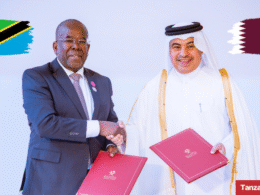
Tanzania remains as the most important partner country for Germany in Africa, said Ergon Kochanke, German Ambassador to Tanzania after the agreement’s signature with Dr. Servacious Likwelile, Tanzania’s Ministry of Finance and Economic Affairs Deputy Permanent Secretary.

The agreement is mainly focus in water and sanitation, however, regarding biodiversity and natural resources, Germany is committed to strengthen the management on protected areas with special emphasize in the Serengeti and the Selous national parks to reduce wildlife poaching which has quickly increased over the last years.

In addition, Germany will also assist Tanzania to improve tapping of renewable energy resources, strengthening of capacities in resource governance and support to the Tanzania’s National Audit Office (NAO) to improve financial management.

According to the German Embassy, the country will continue to support these and other development projects for the water sector to ensure that poorest people in Tanzania will have access to clean and safe drinking water and sanitation, by advising on policies’ establishment and investments in cost-efficient infrastructure.

According to the World Bank, in Tanzania 53.2% of the population has access to improved water services compared with an average of 64.4% for the Sub-Saharan region.

Regarding to access to improved sanitation facilities, in Tanzania 12.2% of the population enjoys this benefit against 29.6% in the Sub-Saharan region.

Want to know more about the Economy in Tanzania? Our free Tanzania Business and Investment Guide 2026 covers the Economy, plus regulations, key sectors, and investment opportunities—all in one place.

Download Free Guide
Related Posts
Tanzania budget 2026 2027 private sector review
Read More

Tanzania Private Sector Embraces 2026/27 Budget Reforms but 10% GDP Growth Needed to achieve Vision 2050

The Tanzania Private Sector Federation (TPSF) and the Confederation of Tanzania Industries (CTI) welcomed several business and tax reforms in Tanzania's 2026/27 Budget, including faster VAT refunds, investment incentives, and regulatory simplification. However, private sector leaders said economic growth will need to accelerate from the targeted 6.3% in 2026 to more than 10% annually to achieve the Tanzania Development Vision 2050 goal of becoming a USD 1 trillion economy.
Tanzania Khamis Mussa Omar Parliament bunge
Read More

Tanzania 2026/27 Budget of TZS 62.33 Trillion Targets 6.3% GDP Growth and Investments in Railways, Offers New Businesses One-Year Tax Holiday

Tanzania's 2026/27 budget is set at TZS 62.33 trillion (USD 24 billion), up 10.3% from the previous financial year, targeting 6.3% GDP growth with 74.2% financed from domestic revenue as grants fall 39.1%. Key investor measures include halving the deemed profit-distribution tax from 30% to 15%, a one-year income tax holiday for newly registered businesses, retained VAT deferment on imported capital goods, and VAT exemptions across compressed natural gas, electric vehicle charging equipment, and LPG infrastructure.
Samia Suluhu Hassan Tharman Shanmugaratnam
Read More

Tanzania and Singapore Sign Double Tax and Other Agreements, TISEZA Hosts Business Forum to Strengthen Trade and Investment

Tanzania and Singapore signed five agreements and memoranda of understanding during President Tharman Shanmugaratnam’s state visit to Tanzania, covering taxation, trade facilitation, public service capacity building and diplomatic cooperation. The two countries also reaffirmed plans to deepen collaboration in investment, digital transformation, logistics, financial services and industrial development as bilateral trade reached USD 74 million and Singaporean investments in Tanzania exceeded USD 535 million.
Kitila Mkumbo Parliament Bunge
Read More

Tanzania Planning and Investment Budget 2026/2027 Backs New Investment Policy and Diaspora Bonds, with Five Strategic SEZs to Draw TZS 797 Billion

Beyond a new National Investment Policy 2026 and five strategic Special Economic Zones expected to draw over TZS 797 billion, Tanzania's TZS 144.85 billion Planning and Investment Budget 2026/27 sets a target to make the country a leading African vehicle producer by 2030 and creates Youth Industrial Special Economic Zones across six regions. Flagship projects already underway include Hengya Cement (USD 530 million), Airtel's USD 480 million 5G rollout, and Songea Sukari's USD 352 million sugar complex.