
Tanzania’s President Samia Suluhu Hassan unveiled a new policy doctrine called “Sovereign Pragmatism,” setting Tanzania’s strategic direction toward trade-driven growth, technology transfer, and value-added investment.
The President made the announcement to the diplomatic community on January 15, 2026, while hosting the annual Diplomatic Sherry Party at Chamwino State House in Dodoma.
Addressing ambassadors, high commissioners, and heads of international organisations, President Samia said the doctrine is anchored in national interest, institutional renewal, and macroeconomic resilience, and is intended to guide both Tanzania’s foreign policy and its domestic economic agenda.

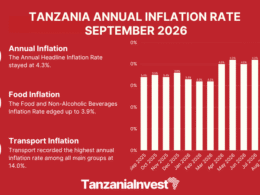
She presented Tanzania’s recent economic performance as evidence supporting the new policy direction, stating that the country recorded GDP growth of 5.9% while headline inflation was maintained at 3.3%, and that public debt remains within sustainable thresholds supported by capital market performance and sovereign credit ratings.
On investment performance, the President said that by December 2025 Tanzania had registered 927 new investment projects valued at USD 11.09bn, with the projects expected to generate more than 162,000 jobs.
Explaining the policy shift under Sovereign Pragmatism, President Samia said Tanzania is moving away from a development model centred on aid dependence toward trade, investment, and technology transfer.
“We seek trade, not just aid; technology transfer, not just technical assistance,” President Samia said.
She explained that Tanzania’s international engagement under the doctrine will be non-aligned but multi-engaged, combining cooperation with partners from different geopolitical blocs, adding that the country intends to bridge concessional support from Western partners with large-scale infrastructure and industrial partnerships from Eastern economies.

Within this framework, the country is prioritising value addition in strategic sectors, including liquefied natural gas and critical minerals linked to the global green transition.
President Samia also announced that 2026 marks the official launch of the Tanzania Development Vision 2050, known as Dira 2050, which she described as the long-term roadmap for achieving double-digit economic growth.
She said the strategy focuses on expanding the blue and green economies, positioning Tanzania as a regional logistics hub serving the Southern African Development Community and the East African Community, and shifting the economy from primary production toward higher-value industrial activity.
Addressing domestic stability, President Samia referred to the post-election incidents of October 29, 2025, and said the government remains committed to reconciliation and institutional reform.
She announced the pardon of 1,787 convicts linked to the unrest, said an independent inquiry commission is continuing its work to ensure accountability, and stated that a structured roadmap toward constitutional reforms is being developed through inclusive reconciliation mechanisms.
Concluding her address, President Samia said Tanzania’s policy direction is focused on long-term stability, transparency, and engagement with international partners.
“Tanzania is a nation that has learned from its past and is strictly focused on its future. We invite you to engage with us in a spirit of transparency and inclusivity as we build a nation that is both prosperous and at peace with itself,” she concluded.
Want to know more about the Economy in Tanzania? Our free overview of the Tanzania Business and Investment Guide 2026 covers the Economy, plus key sectors and investment opportunities. The complete 141-page edition includes policies, taxation, key regulations, full macroeconomic data, and sources, and is also available at no cost upon completion of a short form.
Download Free OverviewGet the Full Edition for Free