
In accordance with an agreement that was signed last year between the two countries, Norway has released the TSh55.2 billion it had pledged to Tanzania Roads Safety Program and has transferred the funds to the General Budget Support (GBS), which will use the money to support the Tanzania economy as a whole.
The original agreement between the two countries was signed in 2005, however, in October of last year, the Addendum which terminated the funding for the roads sector and redirected it to the General Budget Support was approved and signed by both parties.
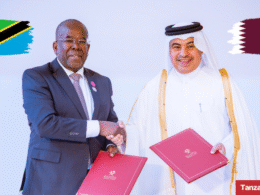
The ceremony for the signing of the updated agreement took place last week in Dar es Salaam, at which time the Tanzania Minister for Finance and Economic Affairs, Mr. Mustafa Mkulo, said that the funds from Norway would contribute to the overall economic growth and poverty reduction plans of the country.
In addition to the remaining TSh55.2 billion that has been redirected to the GBS, Norway also further extended their support to a total Sh131.4 billion grant, which will be dispersed over the next three years.

“I am happy to note that the signing of these two agreements will trigger disbursement of the first annual installment of 48bn/- for financial years 2008/09 budget,” said Mr. Mkulo, “The funds will be used in various dimensions by supporting the financing, implementation and monitoring of the National Strategy for Growth and Reduction of Poverty (MKUKUTA).”
According to Mr. Mkulo, the decision to release the funds from the Roads Safety Program to the GBS, is in line with the principles of the Joint Assistance Program of Tanzania (Jast), which was designed, in part, to deepen the relationship between the Government of Tanzania and its development partners as well as to simplify the processes and procedures between the government and donors in order to make aid more effective and manageable.
“The Jast clearly states that GBS is the Government’s most preferred aid delivery modality, as it contributes to the reduction of transaction costs and makes use of existing structures and systems,” said Mr. Mkulo.
Mr. Mkulo went on to thank Norway for their continued support and recognized them as one of the country’s longest standing and most reliable development partners, having supported development in Tanzania since 2003.
In addition, Mr. Mkulo reassured stakeholders in the roads sector that the shift in support from this sector to the GBS would not cause the sector to suffer, but would actually prove to be beneficial as it will help make aid more predictable, accountable and transparent.

“In 2006, [the Norway] Government decided to shift its support from Primary Education to General Budget Support [and Primary Education] has continued to be satisfactory,” said Mr. Mkulo, “The experience in education should, therefore, serve to provide assurance to stakeholders in the road sector.”
Want to know more about the Economy in Tanzania? Our free overview of the Tanzania Business and Investment Guide 2026 covers the Economy, plus key sectors and investment opportunities. The complete 141-page edition includes policies, taxation, key regulations, full macroeconomic data, and sources, and is also available at no cost upon completion of a short form.
Download Free OverviewGet the Full Edition for Free