Tanzania On Schedule To Issue Eurobond To Fund Infrastructure Projects In 2015

According to the Tanzanian Minister Finance and Economic Affairs, Saada Mkuya Salum, plans for the government to issue its first Eurobond to fund infrastructure projects are now on schedule following a period of delays caused by a number of procedural requirements.

The Eurobond process in Tanzania was originally launched in 2008, but was postponed due to the global financial crisis and launched again in 2012 with the intention of issuing the Eurobond during the 2012/13 financial year to fund infrastructure projects that would spur economic growth and improve living standards.

Because unreliable infrastructure networks have increased the cost of doing business, Hon. Salum indicated that the government is working to finalize important processes in order to float the Eurobond to finance long-term infrastructure projects and investments.
 
“We expect all the processes needed in floating the Eurobond to be ready by March,” she said, “The responsibility for meeting the enormous demand for new and better infrastructures remains to be of paramount importance owing to increased population and fast growing economic activities.”
Tanzania Investment Guide 2026 Free Edition

Analysts have indicated that the Eurobond could help to bridge the gaps left by decreasing donor support of the development budget.

Several other countries have already benefited from successfully issued bonds including Ghana, Rwanda, and Kenya.

Want to know more about the Economy in Tanzania? Our free overview of the Tanzania Business and Investment Guide 2026 covers the Economy, plus key sectors and investment opportunities. The complete 141-page edition includes policies, taxation, key regulations, full macroeconomic data, and sources, and is also available at no cost upon completion of a short form.

Download Free OverviewGet the Full Edition for Free
Related Posts
IMF World Economic Outlook 2026 Tanzania
Read More

Tanzania GDP to Grow 6.0% in 2026 and 5.9% in 2027 With Inflation at 4.0%, IMF Projects

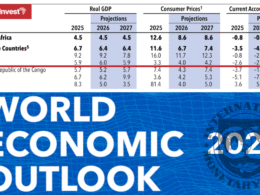
In its World Economic Outlook October 2026, the IMF projects Tanzania’s real GDP growth at 6.0% in 2026 and 5.9% in 2027, above the 4.5% sub-Saharan Africa average and Kenya’s 4.5%, while Uganda and Rwanda are projected at 6.2% and 7.4%. Tanzania’s inflation is projected at 4.0% in 2026 and 4.2% in 2027, below the 8.6% sub-Saharan Africa average and Kenya’s 6.0%.
Central Bank of Tanzania BOT CBR Interest Rate Q4 2026
Read More

BOT Maintains Tanzania Central Bank Rate at 6.25% for Q4 2026; GDP Growth Projected at 7.2% in Q4 2026, Driven by Agriculture, Construction, Mining, and Tourism

The Bank of Tanzania (BOT) released its Monetary Policy Report of October 2026, in which the Monetary Policy Committee (MPC) decided to maintain the Central Bank Rate (CBR) at 6.25% for the fourth quarter of 2026, allowing the July 2026 increase to fully transmit through the economy. The MPC will keep policy agile and flexible to limit risks to the inflation outlook from the Middle East conflict and potential El Niño-related disruptions, and keep inflation within the 3-5% target range.
Interview Jana Bricco IMF Resident Representative Tanzania no logo
Read More

Interview with Jana Bricco, New IMF Resident Representative in Tanzania, on Economic Growth, Private Investment, and Needed Reforms

In this exclusive interview with TanzaniaInvest, the new IMF Resident Representative Jana Bricco says Tanzania can sustain growth of around 6% by preserving macroeconomic stability and accelerating reforms supporting private investment, productivity and jobs. She calls for fewer regulatory obstacles, more predictable taxation, faster VAT refunds and better access to finance for businesses and SMEs, and explains how IMF support will evolve following the end of its financing programmes, with the relationship now focused on policy dialogue and capacity development.