

EIB
Under the EIB Group Climate Bank Roadmap 2021 to 2025, more than 50% of annual EIB financing is to be dedicated to green investment by 2025, anchoring a EUR 1 trillion climate and environment pipeline to 2030 that Tanzanian renewable energy, water and SME projects can draw from.[5]
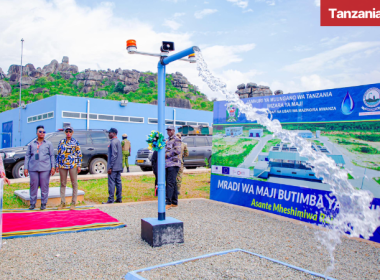
The European Investment Bank engages Tanzania as part of its Sub-Saharan Africa mandate, deploying loans, intermediated credit lines, equity and guarantees to support renewable energy, SME finance, water and social infrastructure aligned with the country's medium-term development priorities.[1]
Access for Tanzanian sponsors runs through both direct facilities for the public sector and framework or intermediated loans channelled via local banks, with the Climate Bank Roadmap providing the overarching policy anchor for operations approved from the end of 2020 onward.[5]
Contents
EIB Mandate and Presence in Tanzania
Tanzania sits within the EIB's Sub-Saharan Africa regions of activity, where the bank operates as the European Union's investment arm beyond EU borders.[1]
The EIB's product range available to Tanzanian counterparts includes loans for the public sector, framework loans, intermediated loans for SMEs and mid-caps, microfinance, equity and guarantees.[2]
This mix positions the EIB as a long-tenor euro-denominated co-financier alongside the Tanzanian government, development partners and commercial banks, particularly for capital-intensive infrastructure and green projects.[1]
For scale reference, EIB lending signatures reached EUR 63.3 billion in 2019, illustrating the size of the resource pool the bank can direct toward priorities relevant to Tanzania.[6]
Thematic Focus Areas for Tanzanian Operations
The EIB's priority areas cover climate and environment, innovation, digital and human capital, regional development and cohesion, agriculture and bioeconomy, and social infrastructure, all of which align with Tanzania's development agenda.[1]
Renewable Energy and Climate
Renewables sit at the centre of the EIB's external portfolio under the Climate Bank Roadmap, with the bank committing that more than 50% of annual financing goes to green investment by 2025.[5]
This green envelope is the entry point for Tanzanian solar, hydro, grid and energy efficiency operations seeking blended concessional and market-rate finance.[5]
SME Credit Lines
The EIB channels external SME finance through local intermediaries that on-lend to final beneficiaries, which is the route most relevant for Tanzanian small and medium-sized enterprises requiring longer tenors and expansion capital.[2]
Historically, the Board of Governors authorised a second tranche of EUR 1 billion for venture capital operations for SMEs at its meeting on 5 June 2000, and reformed the European Investment Fund into the EIB Group's specialist venture capital arm, laying the architecture that today supports intermediated SME lending in partner economies including Tanzania.[3]
Water and Social Infrastructure
Regional development, cohesion and social infrastructure feature among the EIB's core priorities, providing the framework for co-financing structures in water supply, sanitation, urban systems and public services relevant to Tanzanian secondary cities and utilities.[1]
Climate Bank Roadmap and Green Finance Pipeline
On 13 November 2020, the EIB Board of Directors approved the Climate Bank Roadmap 2021 to 2025, setting out how the EIB Group supports the European Green Deal and sustainable development outside the European Union.[5]
The roadmap targets support for EUR 1 trillion in investment for climate action and environmental sustainability in the decade to 2030, and aligns all EIB Group financing activities with the Paris agreement from the end of 2020.[5]
The existing EIB Climate Strategy, first announced at the Paris Climate Conference in 2015, was updated in parallel to align with the 1.5 degree temperature goal.[5]
For Tanzania, the roadmap defines the eligibility perimeter for renewable energy, climate adaptation, low-carbon transport and green capital markets operations that can be brought forward by public and private sponsors.[5]
Intermediated Finance and Access Channels
Beyond direct sovereign lending, the EIB reaches Tanzanian final beneficiaries through a network of local intermediaries that receive credit lines and on-lend to SMEs, mid-caps and priority sectors.[2]
The instrument menu spans intermediated loans for SMEs and mid-caps, microfinance, equity co-investment, venture debt and guarantees in support of SMEs and other objectives.[2]
Advisory services complement the financing offer, helping Tanzanian promoters structure bankable projects that meet EIB appraisal standards on economic, environmental and social criteria.[1]
Policy Framework for EU Tanzania Cooperation
The Climate Bank Roadmap was approved unanimously by the EIB Board of Directors, composed of representatives from the EU member states, following a stakeholder engagement that included two major events in March and June 2020 and more than 200 written submissions.[5]
The EIB Group's governance and control framework was documented in the 2019 Corporate Governance Report, which summarised the developments shaping how the bank oversees its operations globally.[4]
Together, the Climate Bank Roadmap and the underlying EIB Global mandate provide the policy anchor under which Tanzanian project sponsors can align with EU-backed climate, cohesion and SME objectives.[5]
Last Update: July 2026