

Tanzania Gold Exports Up +25% in August 2019

Tanzania gold exports august 2019

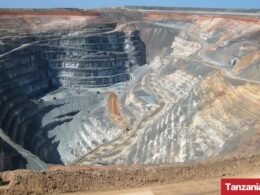
The latest Bank of Tanzania (BOT) Monthly Economic Review indicates that in August 2019 gold exports rose by +25.1% to USD 1,915.3 million, driven by volume, and accounted for more than half of non-traditional exports.

The value of non-traditional exports was USD 3,904.2 million in the year ending August 2019 compared with USD 3,257.5 million in the corresponding period in 2018, largely driven by minerals (particularly gold), and manufactured goods.

The increase in the export of manufacturing goods manifested mostly in manufactured coffee, yarn and twine, iron and steel, and fertilizers.

Tanzania Investment Guide 2026 Free Edition

Services receipts amounted to USD 3,916.3 million in the year ending August 2019 compared with USD 3,887.4 million in the year ending August 2018 and accounted for 44.7 percent of total exports. Much of the increase emanated from travel receipts.

The value of traditional goods exports fell by 55.0% year-on-year to USD 508.8 million in the year ending August 2019.

The decline was general for all traditional goods exports, save for coffee.

The value of coffee exports rose on account of an increase in volume following good weather during the crop season, while that of cashew nuts declined due to fall in both volume and unit prices in the world market.

The value of cloves, tobacco and sisal export decreased on account of volume, while that of tea was driven by price in the world market.

Tanzania Investment Guide 2026 Full Edition

Cloves did not perform well due to the cyclical nature of the crop.

For the year ending August 2019, the overall export of goods and services improved slightly to USD 8,770.6 million from USD 8,713.2 million in the year ending August 2018.

Want to know more about the Economy in Tanzania? Our free overview of the Tanzania Business and Investment Guide 2026 covers the Economy, plus key sectors and investment opportunities. The complete 141-page edition includes policies, taxation, key regulations, full macroeconomic data, and sources, and is also available at no cost upon completion of a short form.

Download Free OverviewGet the Full Edition for Free

Related Posts
Tanzania Global Environment Facility (GEF) funding
Read More

Tanzania Set to Receive USD 41 Million in GEF Environmental Funding

Tanzania is set to receive approximately USD 41 million through Global Environment Facility funding windows for biodiversity conservation, ecosystem restoration and climate resilience. The allocation includes USD 16 million from the GEF Trust Fund, USD 20 million from the LDCF and USD 5 million from the GBFF, making Tanzania the third-largest recipient in Africa.
Tanzania Investment Guide 2026 Free Edition
Read More

Free Tanzania Investment Guide Tops 10,000 Downloads from 109 Countries in the First Four Months

TanzaniaInvest's free Tanzania Business and Investment Guide 2026 has been downloaded more than 10,000 times across 109 countries since its 1 April 2026 launch, with Tanzania and the United States being the leading source markets. The pace is in line with TanzaniaInvest's annual objective of 30,000 downloads, and an updated edition with fresh economic data is planned in October 2026.
Samia Suluhu Hassan Angelina Ngalula Tanzania Vision 2050 implementation
Read More

Government and Private Sector Sign Joint Declaration to Implement Tanzania Vision 2050 and Accelerate Investment Growth

Tanzania's President Samia Suluhu Hassan has launched the implementation framework for Development Vision 2050, with the government and private sector signing a Joint Declaration to accelerate investment, industrialisation and economic transformation. The private sector is expected to lead about 70% of implementation over the next 25 years as Tanzania targets a USD 1 trillion economy by 2050.
TANZANIA ANNUAL INFLATION RATE JUNE 2026
Read More

Tanzania Inflation Eases to 4.0% in June 2026 as Food Prices Cool but Transport Hits 13.6%

Tanzania's annual headline inflation eased to 4.0% in June 2026 from 4.2% in May, driven by a drop in food inflation to 4.1% from 5.6%, while transport prices continued to surge at 13.6% year-on-year as diesel, bus, taxi, and bodaboda fares recorded further increases. Core inflation rose to 3.7% from 3.4%, and the Services Index climbed to 5.4%, signaling broadening underlying price pressures, according to the National Bureau of Statistics.