

EcoGraf Limited (ASX: EGR) has completed an independent engineering study confirming that its planned TanzGraphite Mechanical Shaping Facility in Ifakara, Tanzania, will deliver a highly competitive spherical graphite (SpG) yield of over 60%.
The facility will process 20,000 tonnes of flake graphite annually, with operating costs forecasted at just USD 419 per tonne, leveraging Tanzania’s clean hydroelectric power and efficient transport infrastructure.
The study, which is the result of over 10 years of technical work by EcoGraf, highlights the strategic advantages of the Ifakara site.

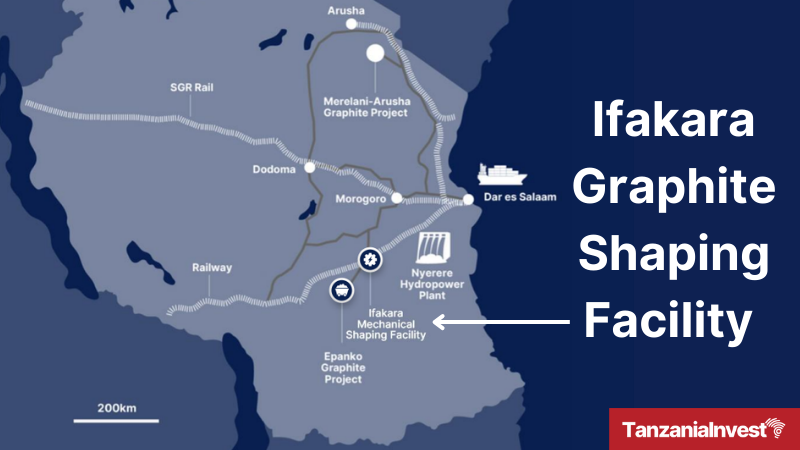
Located near the EU-funded Ifakara substation and the Julius Nyerere Hydropower Project, the site benefits from access to clean, cost-effective energy.
Additionally, its proximity to the Dar es Salaam-Ifakara highway and the TAZARA railway network ensures efficient transport of graphite products to global markets.
These factors contribute to significant cost savings in power and logistics, making Tanzania a highly competitive location for graphite value-addition.
The TanzGraphite Mechanical Shaping Facility will convert high-quality flake graphite from EcoGraf’s Epanko Graphite Project into battery-grade anode material for lithium-ion batteries.
The shaping process, which involves mechanical micronizing and shaping, is the first step in producing spherical graphite. The facility will also generate by-product fines, which EcoGraf plans to use in its GreenRECARB initiative for the global steel industry.

The study also confirmed a 20% reduction in CO2 emissions during the shaping process, thanks to Tanzania’s reliance on clean hydroelectric power.
EcoGraf is in discussions with the European Union Commission to support the development of the facility and explore further graphite value-addition opportunities. The company has received strong interest from European investors and customers to support the project.
Andrew Spinks, Managing Director of EcoGraf, stated, “This study confirms Tanzania’s strategic advantages in graphite value-addition, positioning the country as a key player in the global battery supply chain.”
The Epanko Graphite Project, located 75 km from Ifakara, is expected to produce 300,000 tonnes of flake graphite annually. The shaping facility is designed to expand alongside increased production from Epanko.
The project recently received a Special Mining License from the Tanzanian government, ensuring a long-term, scalable supply of natural graphite for EcoGraf’s operations.
The company’s vertically integrated strategy aims to supply sustainable and cost-effective battery anode materials for the global electric vehicle and battery markets.
Want to know more about Mining in Tanzania? Our free overview of the Tanzania Business and Investment Guide 2026 covers Mining, plus key sectors and investment opportunities. The complete 141-page edition includes policies, taxation, key regulations, full macroeconomic data, and sources, and is also available at no cost upon completion of a short form.
Download Free OverviewGet the Full Edition for Free