Chinese Company to Build Grinding-Ball Factory at Buzwagi SEZ

China’s Oriental Casting and Forging Ltd plans to establish a factory for steel grinding balls and other mining consumables at the Buzwagi Special Economic Zone in Kahama, Shinyanga, following a meeting between Minister of Minerals Anthony Mavunde and the company’s managing director Hou Songcun. The project is part of Tanzania’s push to manufacture mining consumables locally, cut import dependence and position itself as a regional supply hub, though no investment value or job figures have been disclosed.
Tanzania Grinding-Ball

China’s Oriental Casting and Forging Ltd plans to build a factory for steel grinding balls and other mining consumables at the Buzwagi Special Economic Zone in Kahama, Shinyanga Region.

The plan follows a recent meeting between the Minister of Minerals, Anthony Mavunde, and the owner and Managing Director of Oriental Casting and Forging, Hou Songcun.

Steel grinding balls are consumables used in mineral processing plants to crush and grind ore, a supply Tanzanian mines currently meet largely through imports.

Tanzania Investment Guide 2026 Free Edition

The Government wants the consumables produced locally to cut import dependence, strengthen supply chains and add industrial value to the mining sector.

The Ministry said the goal is for Tanzania to become a regional production and distribution hub that supplies mining products across Africa, allowing both large and small miners to source them without importing.

The value of the planned investment, the number of jobs and a construction timeline were not disclosed.

Buzwagi Special Economic Zone

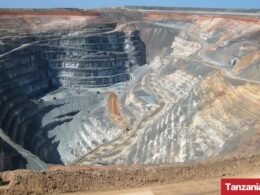
The Buzwagi Special Economic Zone occupies the site of the former Buzwagi gold mine, about six kilometres from Kahama in Shinyanga Region.

The open-pit mine, operated by Barrick, closed in 2022 after about 13 years of production, and the site is being redeveloped as an industrial zone intended to replace the mine as the region’s economic driver.

Tanzania Investment Guide 2026 Full Edition

Related Posts
Tanzania Mineral Testing Laboratory Dodoma 3d plan
Read More

Dodoma Mineral Testing Laboratory on Track for September 2027 Completion

The Geological Survey of Tanzania (GST) says construction of its Dodoma mineral testing laboratory in Kizota, Dodoma, is progressing on schedule, with completion set for September 2027, a year after Minister for Minerals Anthony Mavunde laid the foundation stone in August 2025. The TZS 14.3 billion (approx. USD 5.4 million) facility is expected to become the largest of its kind in East and Central Africa, offering internationally accredited testing services and easing long-standing sample-analysis delays for artisanal and small-scale miners.
IMF Tanzania flag
Read More

IMF Approves USD 443.9 Million for Tanzania, Projects 6.2% GDP Growth Supported by Mining, Agriculture, and Tourism

The IMF Executive Board has approved an immediate disbursement of USD 443.9 million to Tanzania after completing the final reviews under the Extended Credit Facility and Resilience and Sustainability Facility programmes. The IMF said Tanzania maintained strong economic growth and macroeconomic stability while highlighting the need for continued reforms and fiscal consolidation.
Tanzania Mining Revenues 2025-2026
Read More

Tanzania Mining Revenue Hits TZS 1.39 Trillion in 2025/26, Beating Target by 16%

Tanzania mining revenue reached TZS 1.394 trillion (± USD 558 million) in the 2025/26 financial year, surpassing the annual target of TZS 1.2 trillion by 16.13% and marking a 30.2% increase over the TZS 1.071 trillion collected in 2024/25. The result caps a period of rapid growth for the sector, whose GDP contribution averaged 11.9% in 2025 and whose mineral exports rose 31.1% to USD 5.4 billion.
Tanzania Anthony Mavunde Parliament Bunge
Read More

Tanzania Allocates 10% of Mining Revenue to Expand Mineral Exploration

Tanzania has approved the allocation of 10% of mining sector revenue to finance advanced mineral exploration activities across the country. The funding is expected to support high-resolution surveys, identify new mineral-rich areas, attract investment, and strengthen the sector's contribution to economic growth.