
Marula Mining (AQSE:MARU, A2X: MAR) has signed an agreement to acquire 100% of Takela Mining Tanzania, owner and operator of the Kinusi Copper Mine in Dodoma Region.
The company, through its subsidiary Marula Mining Tanzania, previously held a 75% interest in the Kinusi Mine. With the acquisition, Marula will take full ownership and operational control of the mine.
Under the terms of the agreement, Marula will pay £ 2.5 million, divided into three stages: £ 500,000 upon signing, £ 750,000 upon conversion of 10 Primary Mining Licences into a single Mining Licence, and £ 1.25 million once commercial sales exceed 10,000 tonnes.

Takela shareholders may receive payment in cash or Marula shares and will also retain a 1.5% net smelter royalty on gross sales.
The agreement also stipulates that once the licences are consolidated, the Tanzanian government will hold a 16% free carried interest in line with the Mining State Participation Regulations 2022.
As part of the transaction, Takela Executive Director Stewart Mremi will be appointed General Manager of the Kinusi Mine, reporting to Chris Attwood, Marula’s General Manager of Operations for East Africa.
Attwood said: “Acquiring 100% ownership of Takela and the Kinusi Mine is a key strategic step that will allow the Company to progress our development plans and streamline operations. The licence consolidation will also enhance our operational efficiency.”
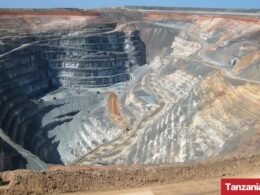
Recent site visits by Marula’s management confirmed copper mineralisation potential and ongoing open-pit mining activities. Recommendations for development include new crushing and screening equipment, expanded site facilities, offices, storage, warehousing, and additional mining equipment.

Earlier in 2025, two trial shipments of approximately 1,000 tonnes of copper ore were completed, leading to advanced discussions with a global commodity trading group for a long-term offtake agreement covering 100% of planned copper concentrate and cathode production from the Kinusi Mine.
Marula Mining and Kinusi Copper Mine
Marula Mining is focused on battery and critical metals projects across Africa. Its portfolio includes the Blesberg Lithium and Tantalum Mine and Northern Cape Lithium and Tungsten Project in South Africa, the Boteti Lithium Brines Project in Botswana, the Larisoro Manganese Mine and Kilifi Manganese Processing Operation in Kenya, and multiple graphite and copper projects in Tanzania.
The Kinusi Copper Mine is located in Kinusi, Mpwapwa District, in the Dodoma Region of central Tanzania.
Marula Mining initially secured a 75% commercial interest in 10 Primary Mining Licences at Kinusi through a binding head of agreement with Takela Mining. The licences are valid for seven years.
Sampling from small-scale mining activities and surface mineralisation in shallow pits and shafts confirmed copper grades of up to 31.32%. Further due diligence identified a potential high-grade, shallow ore body extending over 1 km in length and more than 300 m in width at the main Sasimo Prospect. Assay results from the prospect returned high copper grades of 15.48%, 11.69%, 11.03%, 8.11%, 6.55% and 6.54%.
An initial exploration target estimated a 10–15 million tonne deposit of high-grade copper and gold, with potential to increase to more than 50 million tonnes after resource drilling.
To support production, a two-phase processing plant has been designed and constructed on site. Commissioning is planned for early 2025.
The first phase will use gravity concentrate, coarse jigging and fines dewatering to produce 24,000 tonnes per annum of high-grade copper concentrate.
The second phase will include a hydrometallurgy fines heap leaching circuit, solvent extraction and electrowinning to produce 10,200 tonnes per annum of copper cathode.
Want to know more about Mining in Tanzania? Our free overview of the Tanzania Business and Investment Guide 2026 covers Mining, plus key sectors and investment opportunities. The complete 141-page edition includes policies, taxation, key regulations, full macroeconomic data, and sources, and is also available at no cost upon completion of a short form.
Download Free OverviewGet the Full Edition for Free