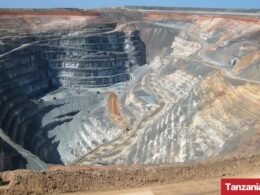


Tanzania has relaxed mining sector regulations after sustained advocacy efforts informed by the USAID East Africa Trade and Investment Hub (the Hub) policy analysis.
The new regulations will expand the number of commercial banks providing services to the mining sector and put Tanzania in compliance with its commitment to the free movement of capital within the East African Community (EAC) under the Common Market Protocol.
The Mining Regulations on Local Content (2019) came into effect on February 8 after years of advocacy against discriminatory measures in Tanzania’s Mining (Local Content) Regulation, GN No. 3 of 2018.

The Hub created a reform memo that identified regulations inconsistent with the EAC Common Market Protocol and international best practices and provided justifications for reform.
The memo highlighted how Tanzania had tightened local content requirements for contractors, sub-contractors and licensees in the mining sector; required a Tanzanian ownership stake of at least 51% for licensing; required a 25% Tanzanian equity partnership to supply goods or services to licensees; and compelled investors to use financial services from Tanzania banks unless they could demonstrate a lack of capacity.
These same areas for reform were included in the Hub’s Tanzania Investment Policy Assessment 2018.
The new regulations reduce the local ownership stake and local content requirements for mining firms and their service providers operating in the country, enabling more actors to participate in the sector.
This helps ensure that companies that have the resources to further develop Tanzania’s mining sector – and 20% Tanzanian ownership – can support the industry’s growth.

The Hub It is funded by the U.S. Agency for International Development (USAID). It boosts trade and investment with and within East Africa.
It does this by deepening regional integration, increasing the competitiveness of select regional agricultural value chains, promoting two-way trade with the United States (U.S.) under the African Growth and Opportunity Act (AGOA) and facilitating investment and technology to drive trade growth intra-regionally and to global markets.
Mining and quarrying activities in Tanzania contributed 3.7% to its GDP with USD 1.78bn in 2014, compared to only USD 598m in 2009, representing a value increase of almost 200%.
According to the Tanzania’s Development Vision 2025 plan, the mining sector is expected to account for 10% of the GDP by that year.
Want to know more about Mining in Tanzania? Our free overview of the Tanzania Business and Investment Guide 2026 covers Mining, plus key sectors and investment opportunities. The complete 141-page edition includes policies, taxation, key regulations, full macroeconomic data, and sources, and is also available at no cost upon completion of a short form.
Download Free OverviewGet the Full Edition for Free