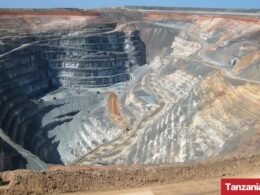


Gold mining company Shanta Gold (AIM:SHG) announced that gold production at its New Luika mine in southwest Tanzania rose by 7%, from 81,873 ounces (oz) in 2015 to 87,713oz in 2016.
This was indicated in Shanta’s recently published production and operational update for Q4 2016.
The update also shows that gold production in 2016 has beaten the guidance of 82,000–87,000oz for that year.

Accordingly, gold sales in 2016 also increased by 7% to 86,331oz from 80,622oz in 2015; the average price of sales was USD1,232 per oz.
Toby Bradbury, CEO of Shanta, said: “In 2017, Shanta will continue to deliver high margin ounces and to generate strong operational cash flows. Shanta is now 15 months into New Luika’s Base Case Mine Plan, as presented in September 2015, and since then the Company has consistently delivered to meet its annual guidance, both in 2015 and 2016. The underground project is significantly de-risked with initial access already developed within the Bauhinia Creek orebody. High grade ore production from underground operations is scheduled to start within six months and I look forward to keeping the market updated on our progress.”
Shanta Gold Tanzania
Shanta Gold, through its wholly owned companies including Tanzanian subsidiary, Shanta Mining Company Limited (SMCL) is engaged in gold mining, development and exploration in Tanzania.
It currently has defined ore resources on the New Luika and Singida projects in Tanzania and holds exploration licenses over a number of additional properties in the country.
New Luika is an active gold mine in the Mbeya region in Southwest Tanzania and its Ilunga deposit is located 2.5km northeast of the New Luika central processing facility. The mine is fully owned by Shanta Gold, which started gold extraction in 2012.

Tanzania Gold
Gold reserves in Tanzania are estimated at about 45m oz with gold exploration centered mostly on the greenstone belts around Lake Victoria.
Gold production in Tanzania stands at around 50t per year which makes it the 4th largest gold producer in Africa after South Africa, Ghana and Mali.
Want to know more about Mining in Tanzania? Our free overview of the Tanzania Business and Investment Guide 2026 covers Mining, plus key sectors and investment opportunities. The complete 141-page edition includes policies, taxation, key regulations, full macroeconomic data, and sources, and is also available at no cost upon completion of a short form.
Download Free OverviewGet the Full Edition for Free