


Perseus Mining Limited (ASX/TSX: PRU) announced on 28 April 2025 that it has made a Final Investment Decision (FID) to proceed with the development of the Nyanzaga Gold Project in northwest Tanzania’s Mwanza Region, near Lake Victoria.
Perseus Mining is an Australian-based gold producer and developer operating in West Africa, with producing assets in Ghana and Côte d’Ivoire.
The company will invest approximately US$523 million, including contingency, to construct and prepare the project for production, with the first gold pour expected in Q1 2027.

The development will be fully financed through interest-free, intercompany loans from Perseus’s existing cash and bullion reserves, which totalled US$801 million as of 31 March 2025.
Ahead of the FID, Perseus had already invested US$27.5 million to build project team capacity and initiate early works, including site establishment, temporary accommodation for construction personnel, bulk earthworks, and implementation of the Relocation Action Plan to provide housing for affected communities.
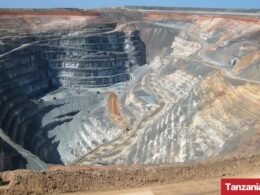
The updated feasibility study reflects a decision to pursue a large-scale, fully open-pit mining operation, diverging from a previously proposed smaller-scale, combined open-pit and underground model.
The Nyanzaga Gold Project is projected to produce 2.01 million ounces of gold over an 11-year Phase 1 mine life, based on a JORC 2012 Probable Ore Reserve of 52.0 Mt at 1.40 g/t gold for 2.3 Moz.
Annual gold production is expected to average over 200,000 ounces from FY28 to FY35, with peak output of 246,000 ounces forecast for FY28.

The estimated All-In Site Cost (AISC) over the life of the mine is US$1,211/oz.
Capital costs include US$472 million for plant and infrastructure, plus US$51 million in pre-production capital, totalling US$523 million.
At a gold price of US$2,100/oz, the project’s estimated post-tax NPV (10%) is US$202 million with an IRR of 19%.
At a higher gold price scenario of US$2,700/oz, post-tax NPV increases to US$617 million with an IRR of 34%.
Perseus noted that the decision builds on its track record of successfully developing and operating gold mines in Africa, including Edikan, Sissingué, and Yaouré, the latter completed ahead of schedule and under budget in 2020.
The FID follows constructive discussions with the Government of Tanzania to finalise the existing Framework Agreement and Shareholders’ Agreement governing the project.
Want to know more about Mining in Tanzania? Our free overview of the Tanzania Business and Investment Guide 2026 covers Mining, plus key sectors and investment opportunities. The complete 141-page edition includes policies, taxation, key regulations, full macroeconomic data, and sources, and is also available at no cost upon completion of a short form.
Download Free OverviewGet the Full Edition for Free