
On 16th March 2026, the Tanzania Mining Commission announced a comprehensive suite of development projects and investment opportunities specifically reserved for young people for the 2026/2027 financial year.
This initiative is part of a deliberate government strategy to create an enabling environment that allows the youth to transition from artisanal observers to active participants in the country’s high-value mineral sector.
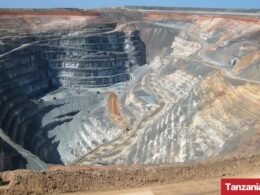
The commission has confirmed that the 2026/2027 roadmap includes the construction of Resident Mines Offices through upcoming tenders and the allocation of 65 special mining areas designated for small-scale operations.

These strategic mining zones are located across mineral-rich regions, including Mtwara, Manyara, Lindi, Morogoro, Dodoma, Tabora, Geita, Shinyanga, Mwanza, and Mbeya to ensure diverse geographical participation.
To support these new entrants, the government is collaborating with the Geological Survey of Tanzania (GST) and the State Mining Corporation (STAMICO) to facilitate access to geological data and build capacity in using modern exploration equipment.
Furthermore, the Commission signed an agreement with CRDB Bank on February 23, 2026, aimed at supporting small-scale gold miners, particularly young people, to access financial capital.
Speaking to journalists in Dodoma, the Mines Inspectorate and Environment Director, Eng. Hamisi Kamando detailed the implementation of these initiatives.
He urged young people to closely follow and take advantage of the opportunities that will arise during the construction of the Resident Mines Offices.

He also noted that the Commission will continue to organise gemstone auctions and exhibitions while allocating additional mining areas depending on the types of minerals available.
Providing background on the sector’s recent performance, Eng. Kamando explained that between July and December 2025, mines procured goods and services worth TZS 3.8 trillion from Tanzanian companies, including those owned by or employing youth.
This followed the reservation of 20 categories of goods and services exclusively for companies that are 100% Tanzanian-owned.
Regarding mineral value addition, seven mineral processing plants are currently operating in the country, creating 273 jobs that mostly benefit young people.
Minerals worth TZS 5.802 trillion were processed locally between July and December 2025 before export.
Through the Mining for Better Tomorrow (MBT) project, the Mining Commission issued 273 licences to 183 youth groups between July and December 2025 in Mara, Kagera, Shinyanga, Morogoro, Dodoma, and Njombe.
These groups are involved in the extraction of gold, copper, gemstones, salt, and building materials, securing direct employment for 2,550 young people by December 2025.
During that same period, the government issued 5,983 licences to small-scale miners, equivalent to 71% of all licences granted.
These small-scale mining licences are issued exclusively to Tanzanians, with the majority of applicants being young people aged between 18 and 45 years.
Want to know more about Mining in Tanzania? Our free overview of the Tanzania Business and Investment Guide 2026 covers Mining, plus key sectors and investment opportunities. The complete 141-page edition includes policies, taxation, key regulations, full macroeconomic data, and sources, and is also available at no cost upon completion of a short form.
Download Free OverviewGet the Full Edition for Free