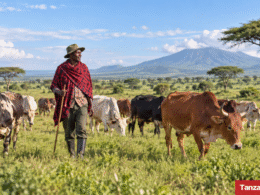


On 15th July 2022, the Board of Directors of the African Development Bank Group (AfDB) approved USD 73.5 million to finance a program that will boost Tanzania’s food production by a million tonnes in three years.
The Tanzania Agricultural Inputs Support Project, spanning September 2022-June 2025, was designed under the Bank Group’s African Emergency Food Production Facility to tackle a potential food crisis exacerbated by the war in Ukraine.
It seeks to strengthen Tanzania’s capacity to achieve self-sufficiency in wheat and edible oil production by 2030.

This approval comprises a USD 2.5 million grant from the resources of the African Development Fund, the Bank Group’s concessional window, and a USD 71 million loan.
The Bank’s contribution represents 87.3% of the project’s total cost, estimated at USD 84.07 million. The Tanzanian government will provide a balance of USD 11 million.
The funds will help strengthen the supply of improved wheat, sunflower, and rice seeds that are climate resilient; ensure fertilizer availability and affordability; and support policies that improve the regulatory environment for the rapid uptake of certified seeds and fertilizers.
Overall, the program will bolster the national production of wheat, sunflower, and rice to mitigate food security risks and climate-induced stresses.
“The Russia-Ukraine conflict, combined with the impacts from Covid-19, climate change, and resultant high prices for fuel and fertilizer, has an adverse impact on poverty and food insecurity. Increases in the cost of edible oils, rice, and wheat will affect all households, but hit the poorest most severely,” said Nnenna Nwabufo, the Bank’s Director General for East Africa.

Tanzania imports more than 90% of its wheat, 67% of which comes from Russia and Ukraine, 47% of vegetable oils from the two countries, and about 25% of fertilizer from Russia.
Recent estimates show that the combined food, fuel, and fertilizer shocks will lead to an additional 1.2 million people falling below the poverty line.
The fertilizer shock is most detrimental for poorer rural households, which rely more heavily on agriculture for their income and spend a larger share of their income on food.
The projected additional production will directly benefit 1.2 million households. Other beneficiaries will include 1,000 small and medium-scale seed producers and agro-dealers and 10,000 unemployed young women and men through jobs in the wheat, sunflower, and fertilizer value chains.
Under the project, land under wheat production will increase from 100,000 ha to 400,000 ha by 2025.
Yields of wheat, sunflower, and rice will double through the use of improved climate-resilient seeds.
Tanzania’s Minister of Agriculture, Hussein Bashe, said the project aligns with Tanzania’s Development Plan to boost agricultural production, enhance incomes, create employment, and diversify products.
AfDB African Emergency Food Production Facility
The AfDB’s African Emergency Food Production Facility is a short-term intervention to raise the production of wheat, maize, rice, and soybean to compensate for the supply deficit due to the war in Ukraine.
The plan will result in the production of 37.6 million tonnes of these staple food crops, an increase of about 30% in local production.
The AfDB is investing USD 1.5 billion in the African Emergency Food Production Facility. This comprises USD 1.3 billion from the African Development Bank and African Development Fund resources, with the remaining funds being mobilized from partners globally.
Want to know more about Agriculture in Tanzania? Our free overview of the Tanzania Business and Investment Guide 2026 covers Agriculture, plus key sectors and investment opportunities. The complete 141-page edition includes policies, taxation, key regulations, full macroeconomic data, and sources, and is also available at no cost upon completion of a short form.
Download Free OverviewGet the Full Edition for Free