
The World Bank (WB) recently published its 27th edition of Africa’s Pulse, a bi-annual publication that analyzes the short-term economic prospects for the continent and current development challenges, as well as a special development topic.
The report explains that economic growth across Sub-Saharan Africa remains sluggish and is expected to slow from 3.6% in 2022 to 3.1% in 2023, dragged down by uncertainty in the global economy, the underperformance of the continent’s largest economies, high inflation that is set to remain high at 7.5%, and a sharp deceleration of investment growth.
The performance of the Sub-Sahara African economy is not uniform across subregions.

The real gross domestic product (GDP) growth of the Western and Central Africa (AFW) subregion is estimated to decline to 3.4% in 2023, from 3.7% in 2022, while that of Eastern and Southern Africa (AFE) declines to 3.0% in 2023, from 3.5% in 2022.
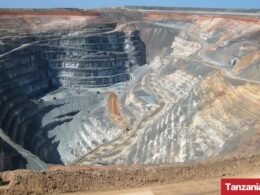
However, resource-rich countries can take advantage of the rising demand for minerals and metals linked to the global transition to a low carbon economy (such as cobalt, copper, and lithium) to increase fiscal resources, create new regional value chains that produce jobs, and accelerate energy access on the continent.
In this regards the WB recalls that Madagascar, Mozambique, and Tanzania are among the 10 countries with the largest graphite deposits.
Futhermore, in its Africa’s Resource Future report recently released, the WB stresses that graphite, which is one of the most important components of lithium batteries, is relatively underexploited in several Sub-Saharan African countries, particularly Tanzania.
Despite having the fifth-largest reserves in the world, Tanzania was ranked twenty-first in global graphite production in 2018.

Furthermore, the WB underlines that natural gas can play an important role for Africa—and the rest of the world—as a transition fuel as countries build up their renewable energy capacity.
Africa is home to 13% of the world’s known natural gas reserves and 40% of the world’s natural gas discoveries between 2010 and 2020. These included discoveries in Mozambique and Tanzania.
However, the WB stresses that turning a “resource curse” into a “resource opportunity” will require good sectoral governance, appropriate taxation to capture a greater share of resource rents, and regional cooperation and investments.
Want to know more about Mining in Tanzania? Our free overview of the Tanzania Business and Investment Guide 2026 covers Mining, plus key sectors and investment opportunities. The complete 141-page edition includes policies, taxation, key regulations, full macroeconomic data, and sources, and is also available at no cost upon completion of a short form.
Download Free OverviewGet the Full Edition for Free