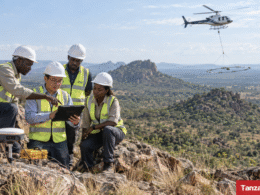




On 8th August 2024, Noble Helium Limited (ASX:NHE) announced the commencement of a key field exploration phase aimed at maturing multiple shallow onshore free gas helium targets to drillable status in Tanzania’s Western Rukwa region.
The exploration follows the recent identification of promising helium targets within the Upper Lake Beds zone, with operations supported by the University of Dar es Salaam’s School of Mines and Geosciences and BGP International Tanzania.
The exploration program, set to be completed by the third quarter of 2024, will involve a series of shallow seismic and electrical resistivity surveys.

These surveys are designed to delineate the geological structures, confirm the presence of free gas, and identify optimal drilling locations. Noble Helium expects to begin drilling and testing these targets during the current dry season.
The Managing Director & CEO of Noble Helium, Shaun Scott, expressed enthusiasm about the project, highlighting the importance of the ongoing collaboration with local institutions. “We are pleased to continue our strong working relationship with the very capable teams at UDSM and BGP. Their swift deployment to the field for this critical stage of our development underscores the exciting potential of our exploration program,” said Scott.
The eight identified targets represent a significant opportunity for Noble Helium, which aims to tap into the region’s high potential for shallow gas accumulations.
The successful discovery of commercially viable helium reserves could help meet the growing global demand for this crucial industrial gas, particularly in high-tech applications where helium is irreplaceable.
Noble Helium’s exploration is part of a broader effort to develop a geopolitically independent and carbon-free source of helium, leveraging Tanzania’s position along the East African Rift System. The company’s focus on “green helium” aligns with global trends towards more sustainable industrial practices, addressing the supply-demand imbalance in the helium market.

The exploration and potential future development of these helium resources could position Tanzania as a key player in the global helium market, with significant economic implications for the region.
Want to know more about Mining in Tanzania? Our free overview of the Tanzania Business and Investment Guide 2026 covers Mining, plus key sectors and investment opportunities. The complete 141-page edition includes policies, taxation, key regulations, full macroeconomic data, and sources, and is also available at no cost upon completion of a short form.
Download Free OverviewGet the Full Edition for Free