




PwC recently released its 28th Annual Global CEO Survey, focusing on East Africa, highlighting a positive economic outlook among Tanzanian CEOs, with a strong emphasis on regional growth and innovation.
The survey, which gathered insights from over 1,000 CEOs across East Africa, including Tanzania, underscores the resilience and adaptability of businesses in the region despite global and local challenges.
Tanzanian CEOs are optimistic about the country’s economic growth, aligning with the broader East African sentiment.

The survey reveals that 72% of East African CEOs expect economic growth in their territories over the next 12 months, with Tanzania being a key focus for regional expansion.
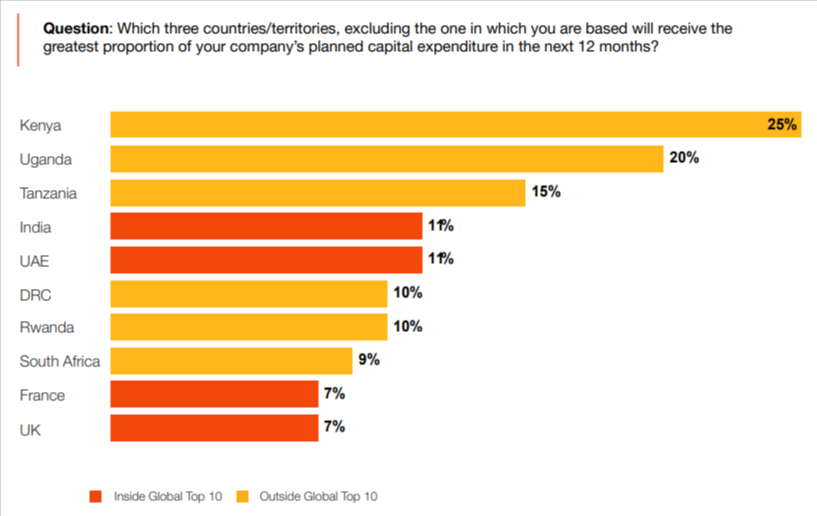
The country ranks third among East African nations where CEOs plan to allocate significant capital expenditure for international operations in the coming year, following Kenya and Uganda.
The survey also highlights the challenges faced by Tanzanian businesses. Macroeconomic volatility, inflation, and cyber risks are identified as major threats to business performance.
Internally, a lack of necessary skills and organizational inefficiencies are seen as key factors affecting business viability.
Despite these challenges, Tanzanian CEOs remain cautiously confident about their companies’ revenue growth, particularly in the medium term, as government policies aimed at improving the business environment and infrastructure begin to take effect.

Zainab Salome Msimbe, Country Senior Partner for PwC Tanzania, emphasized the importance of regional collaboration and innovation in driving economic growth. She noted that Tanzanian businesses are increasingly focusing on adopting new technologies and business models to remain competitive and sustainable in the long term.
The survey also sheds light on the impact of generative AI and climate-friendly investments on business operations. While generative AI is expected to boost efficiency and profitability, climate-friendly investments have been initiated by many companies in the region, including Tanzania, despite challenges in sustaining such investments over the past year.
Want to know more about the Economy in Tanzania? Our free overview of the Tanzania Business and Investment Guide 2026 covers the Economy, plus key sectors and investment opportunities. The complete 141-page edition includes policies, taxation, key regulations, full macroeconomic data, and sources, and is also available at no cost upon completion of a short form.
Download Free OverviewGet the Full Edition for Free


