

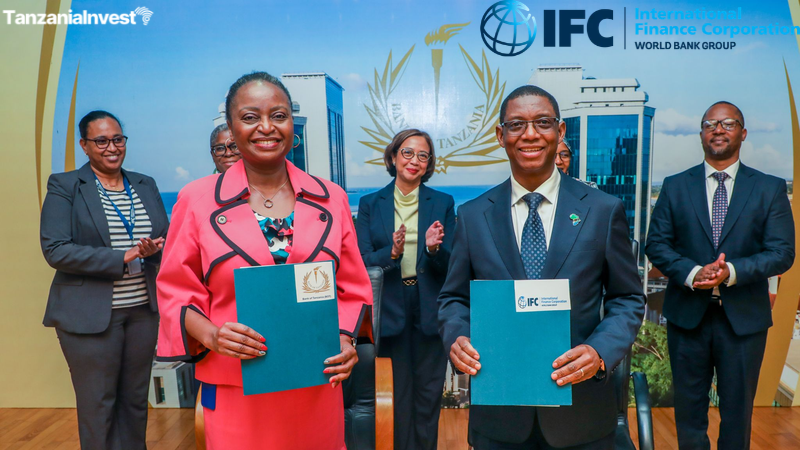
The International Finance Corporation (IFC) and the Bank of Tanzania (BoT) have signed a cooperation agreement to strengthen Tanzania’s credit reporting system and expand access to finance for small and medium-sized enterprises (SMEs).
Under the agreement, IFC will provide technical expertise to strengthen credit information systems and explore the use of alternative data in credit assessments.
The initiative aims to expand financial access for MSMEs, including women-owned and youth-led businesses.

“This agreement will help expand access to financial services, strengthen resilience, and create greater economic opportunity for Tanzanians,” said Mary-Jean Moyo, IFC Division Director for Tanzania, Burundi, the Democratic Republic of Congo, Malawi, Zambia, and Zimbabwe.
She added: “Tanzania is a strategic market for IFC and a gateway to Eastern Africa. Our expanded leadership presence in Dar es Salaam reflects our long-term commitment to increasing investment, supporting private sector growth, and helping create jobs and prosperity across Tanzania and the region.”
For his part, Emmanuel Mpawe Tutuba, Governor of BOT, said: “The Bank of Tanzania remains committed to fostering a stable, inclusive, and innovative financial system that supports sustainable economic growth. This partnership with IFC will help strengthen the credit reporting environment, advance responsible use of data and technology, and improve access to financial services for individuals and businesses across Tanzania.”
According to BOT’s latest Annual Financial Inclusion Report for 2025, MSMEs’ financial inclusion recorded mixed results in the reporting period.
The value of MSME loans stood at TZS 10,409.1 billion by the end of the year. At the same time, the value of personal loans reported to be used to support small businesses was TZS 1,165.0 billion, which indicates the continued use of personal credit facilities by MSMEs operators to finance business activities due to collateral challenges.

Meanwhile, the number of MSME loan accounts increased by 104.9% to 578,692. The increase was associated with continued business formalization initiatives and the expansion of microfinance services.
IFC has previously supported credit reporting in Tanzania, working with BoT, licensed credit bureaus, lenders, and other stakeholders to improve credit information sharing and lending decisions.
Want to know more about Banking in Tanzania? Our free overview of the Tanzania Business and Investment Guide 2026 covers Banking, plus key sectors and investment opportunities. The complete 141-page edition includes policies, taxation, key regulations, full macroeconomic data, and sources, and is also available at no cost upon completion of a short form.
Download Free OverviewGet the Full Edition for Free