
Tanzania has established a legal framework for sharing carbon trading revenue, with forest projects allocating 61% to resource owners, 31% to the project proponent, and 8% to the government.
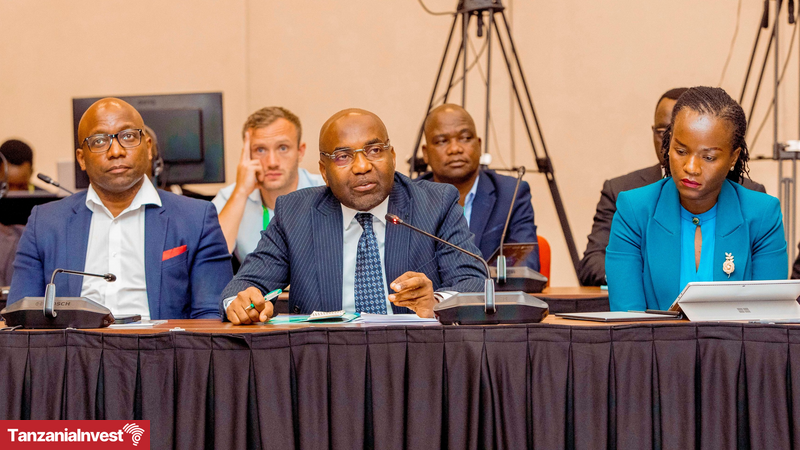
The Minister of State in the Vice President’s Office (Union and Environment), Eng. Hamad Yussuf Masauni announced the arrangement at a ministerial-level meeting of leaders and experts held on the sidelines of the Africa Carbon Markets Forum 2026, which concluded in Kigali, Rwanda, on 15th October 2026.
Masauni said the largest share of the revenue goes to the owners of the resource, with 61% for a forest project, 31% to the project proponent, and 8% to the government.

He explained that the arrangement establishes transparency in the management of carbon trading revenue and reduces the potential for disputes over distribution among investors, the government, and the communities involved in implementing the projects.
Masauni noted that carbon trading forms part of Tanzania’s efforts to meet its targets under the Paris Agreement, including cutting greenhouse gas emissions by 30% to 35% by 2030.
He stated that Tanzania’s experience demonstrates the importance of strong legislation, institutions with clearly defined responsibilities, digital systems, and a fair benefit-sharing mechanism to ensure carbon projects deliver visible results for citizens and contribute to environmental conservation.
Masauni invited external participation in the sector’s development: “Tanzania is ready to work with investors and other countries within and outside Africa to advance investment in carbon projects of high integrity and quality, to ensure this business benefits citizens and contributes to efforts to tackle climate change.”
He added that Tanzania supports cooperation among African countries to build a common carbon market system that reflects the interests of the continent and ensures the benefits reach all citizens.
“We want to see carbon markets working for the benefit of our citizens, while cooperating with our African brothers to build a common system that protects the interests of our continent,” he stressed.
Masauni also said that in August 2026 Tanzania signed four letters of authorization for carbon credits that can be used outside Tanzania, following assessment by the National Committee for the evaluation of carbon projects.
Tanzania Carbon Trading Regulations
The revenue-sharing arrangement stems from Tanzania’s Environmental Management (Control and Management of Carbon Trading Mechanisms) Regulations, 2022 (Government Notice No. 636), which provides a legal framework for the control and management of carbon trading projects to enhance environmental conservation and support global efforts to reduce greenhouse gas emissions.
The regulations were amended in 2023 to refine how costs and benefits are distributed among proponents, managing authorities, and local communities, including revising the shares paid to conservation activities and national trust funds.
The rules followed Tanzania’s first Nationally Determined Contribution submitted in 2021 and were accompanied by National Carbon Trading Guidelines issued in October 2022, which set out procedures and requirements for undertaking carbon trading projects and guidance on cost and benefit-sharing schemes.
A national carbon registry and a Designated National Authority were also established to oversee project registration and ensure compliance with international standards such as Article 6 of the Paris Agreement.
Want to know more about the Economy in Tanzania? Our free overview of the Tanzania Business and Investment Guide 2026 covers the Economy, plus key sectors and investment opportunities. The complete 141-page edition includes policies, taxation, key regulations, full macroeconomic data, and sources, and is also available at no cost upon completion of a short form.
Download Free OverviewGet the Full Edition for Free