


Tanzania’s government has told a Tokyo investment seminar it is ready to attract long-term Japanese investment across manufacturing, technology and trade.
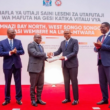
The State Minister in the Office of the President, Planning and Investment, Prof. Kitila Mkumbo, delivered the message on 8 September 2026 at the Tanzania Investment and Business Seminar in Tokyo, the opening event of a promotion campaign running through 18 September across Tokyo, Osaka, Yokohama and Okinawa.
Mkumbo said the government’s objective is to raise employment, technical skills, technology transfer, and the productivity and competitiveness of Tanzanian goods in both domestic and export markets.

“Tanzania aims to use its strategic position as a hub for production, distribution and trade toward African markets,” Mkumbo said.
He stressed Tanzania’s strategic position and membership in the East African Community (EAC) and the Southern African Development Community (SADC), regional blocs that together give investors access to roughly 300 million consumers.
The government currently counts 24 registered Japanese-invested projects in Tanzania, worth a combined USD 42.7 million and supporting around 1,182 jobs, and is targeting at least 48 projects, doubling that base under the Vision 2050 development plan.
Mkumbo pointed to opportunities for Japanese companies across automotive assembly, pharmaceuticals, agro-processing, strategic minerals, energy, infrastructure, transport and tourism, alongside electronics, machinery, logistics and information and communication technology.
He framed the campaign’s priority as building lasting industrial capacity in Tanzania, rather than simply increasing the count of registered investment projects.

The Japan External Trade Organization (JETRO) is engaging with the Tanzanian delegation through the campaign, with JETRO Executive Director Suzuki Takafumi named among the officials involved.
Japanese Investment in Tanzania
More than 40 Japanese companies currently operate in Tanzania, spanning agriculture, infrastructure, energy, manufacturing, digital technology and critical minerals.
Japan’s exports to Tanzania reached USD 726.35 million in 2025, driven mainly by vehicles and iron and steel products, a separate trade measure from the direct investment figures Mkumbo cited.
The Japan International Cooperation Agency (JICA), Japan’s main development cooperation arm, signed a ¥22.7 billion Two Step Loan agreement with Tanzania in January 2025 to expand medium- and long-term financing for farmers and agricultural companies through the Tanzania Agricultural Development Bank.
Want to know more about the Economy in Tanzania? Our free overview of the Tanzania Business and Investment Guide 2026 covers the Economy, plus key sectors and investment opportunities. The complete 141-page edition includes policies, taxation, key regulations, full macroeconomic data, and sources, and is also available at no cost upon completion of a short form.
Download Free OverviewGet the Full Edition for Free