


Tanzania’s Office of the Treasury Registrar (OTR) has set an internal target of collecting TZS 2 trillion in non-tax revenue in the 2026/27 financial year.
The target exceeds the TZS 1.79 trillion assigned to the office by the government and follows collections of TZS 1.327 trillion in 2025/26, and TZS 1.028 trillion in 2024/25.
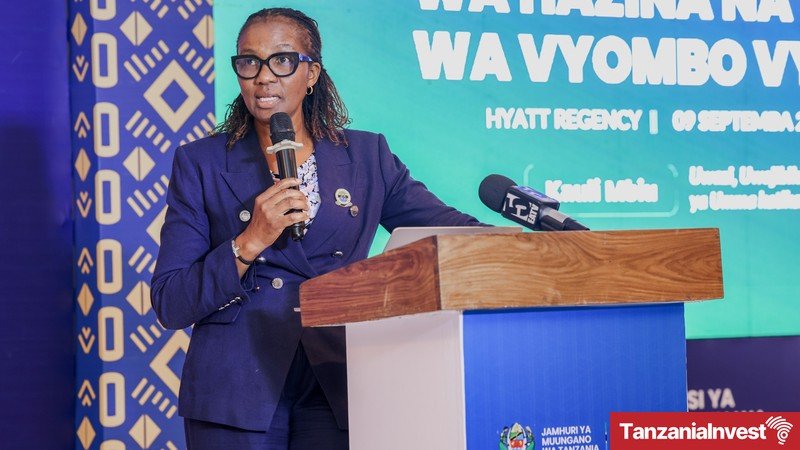
The Acting Treasury Registrar, Lightness Mauki, presented the target during a meeting with media editors in Dar es Salaam on 9th September 2026.

Mauki said the reforms aim to increase revenue from public institutions, strengthen their financial independence, and improve returns on government investments.
She said the implementation of the Finance Act 2025 increased the contribution required from non-commercial public institutions from 15% to 40% of gross revenue.
The office has connected its Public Institutions Management System to other government systems, including the Government e-Payment Gateway, to improve the monitoring of collections.
For commercial public institutions, its strategy calls for annual performance assessments and performance contracts over the next one to two years.
Over three to five years, the plan envisages providing TZS 1 trillion in capital to qualifying institutions, with government development funding provided as equity rather than as conventional grants.

In the longer term, institutions that meet the required criteria could raise capital through the markets, including through initial public offerings (IPOs).
The roadmap places potential capital market fundraising in a phase extending beyond five years, though the office did not name an institution for an IPO or announce an offering date.
Thirteen consulting firms have been engaged to conduct independent assessments of public institutions under the office’s oversight. Mauki said the exercise began in January 2026 and that its first phase has been completed.
She also said the number of mining projects in which the government holds shares had risen from 10 in 2024/25 to 16.
“Increasing non-tax revenue is not merely a matter of collecting more money; it is part of a broader process of building public institutions that can perform well, become more self-reliant, attract capital and generate greater returns from government assets and resources,” Mauki said.
The value of government investments under the office’s oversight rose from TZS 67.73 trillion in 2020/21 to TZS 92.28 trillion in 2024/25, an increase of 37.7%, according to figures presented by the Director of Non-Commercial Entities, David Shambwe.
The office said reliance on government subsidies among non-commercial institutions declined by an average of 12.8% over the past five years.
It cited Tanzania Railways Corporation’s use of its own resources to pay salaries and said Tanzania Petroleum Development Corporation and State Mining Corporation had reached financial self-sufficiency.
Tanzania’s Non-Tax Revenue from Public Investments
The Office of the Treasury Registrar collects non-tax revenue from public institutions and companies in which the government holds shares, including dividends and contributions from institutions’ gross revenue.
At Dividend Day 2026, it was reported that TZS 1.327 trillion was collected in 2025/26, with Twiga Minerals Corporation as the largest dividend payer, at TZS 221.9 billion.
Want to know more about the Economy in Tanzania? Our free overview of the Tanzania Business and Investment Guide 2026 covers the Economy, plus key sectors and investment opportunities. The complete 141-page edition includes policies, taxation, key regulations, full macroeconomic data, and sources, and is also available at no cost upon completion of a short form.
Download Free OverviewGet the Full Edition for Free