


The US Government, through the US Agency for International Development (USAID), will invest USD407m in Tanzania in 2016.
The funding will be disbursed to various sectors in Tanzania, including health, agriculture, natural resource management, education, energy, and democratic governance.
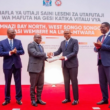
This is part of a five-year strategic assistance agreement signed on August 1st 2016 by Sharon Cromer, Mission Director of USAID, and Servacius Likwelile, Permanent Secretary at the Tanzania Ministry of Finance.
Through the agreement, the US aims to support Tanzania’s socioeconomic transformation to middle income status by 2025.
According to the US Embassy to Tanzania: “This USD407m investment would represent half of the annual budget that the US Government spends on development and other bilateral programs in Tanzania, which are implemented partly by the Government of Tanzania and by non-governmental implementing partners working in Tanzania.”
USAID Tanzania
USAID began working in Tanzania (then Tanganyika) in the early 1960s to build human capacity in the public service sector, for which education was a priority.
USAID helped to establish:
- Morogoro Agricultural College
- The Institute of Public Administration
- Teacher training colleges in both Iringa and Dar es Salaam
While focusing primarily on education, USAID also invested in community development, conservation and infrastructure projects in order to transport food and water to rural areas.
In the 1970s, USAID focused on large-scale agricultural projects with the goal of increasing small farm outputs in Tanzania.
Programs included increasing credit available to farmers, bolstering the extension service within the Ministry of Agriculture, including seed multiplication and distribution.
In the 1980s, USAID’s core objective for Tanzania was to increase transportation services in rural areas.
In the 2000s, USAID shifted its focus to health initiatives in Tanzania.
US-Tanzania Relations
The US established diplomatic relations with Tanzania in 1961. The US is committed to working with Tanzania for sustainable development.
Tanzania’s exports to the US are dominated by agricultural commodities, minerals, and textiles while imports from the United States include wheat, agricultural/transport equipment, chemicals, used clothes, and machinery.
Tanzania is eligible for preferential trade benefits under the African Growth and Opportunity Act. The United States has Trade and Investment Framework Agreements with the East African Community (EAC).
Want to know more about the Economy in Tanzania? Our free overview of the Tanzania Business and Investment Guide 2026 covers the Economy, plus key sectors and investment opportunities. The complete 141-page edition includes policies, taxation, key regulations, full macroeconomic data, and sources, and is also available at no cost upon completion of a short form.
Download Free OverviewGet the Full Edition for Free