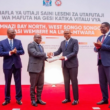



On 8 December 2025 Governor of the Bank of Tanzania (BoT), Emmanuel Tutuba, has announced plans to establish a Credit Guarantee Public Limited Company aimed at expanding access to finance for micro, small, and medium enterprises (MSMEs) and supporting business growth nationwide.
On the same day, the Minister of State, President’s Office, Planning and Investment, Prof. Kitila Mkumbo, announced that the Government is introducing five youth-focused investment initiatives to strengthen industrial participation and enable young entrepreneurs to establish factories and grow businesses.
Governor Tutuba said the new credit guarantee company will help small and medium enterprises access financing and grow economically.

He noted that credit guarantee services are widely used internationally, citing Malaysia, where such a company has operated successfully for more than 50 years.
The initiative is expected to stimulate SME business expansion, increase employment, broaden the government’s tax base, and strengthen economic resilience by boosting production in multiple sectors.
It is also expected to support the development of new investment areas and enhance the country’s competitiveness in the modern economy.
The Chairman of the Tanzania Bankers Association (TBA) and Managing Director of NBC Bank, Theobald Nsabi, said commercial banks are ready to collaborate with the Government to establish the company and continue supporting the financial sector.
Currently, credit guarantees in Tanzania are provided through two BoT-managed schemes: the Export Credit Guarantee Scheme and the Credit Guarantee Scheme for Small and Medium Enterprises (SME-CGS).

The BoT meeting was also attended by officials from the Capital Markets and Securities Authority and the Dar es Salaam Stock Exchange.
Prof. Mkumbo said the youth initiatives are part of national efforts to create 8 million jobs and attract USD 50 billion in investment by 2030. He outlined five key youth investment opportunities:
- The Youth Investors Resource Centre (YIRC) will be launched before the end of the year to provide advisory services, training, and guidance for young investors.
- The Industrial Development Programme will support university graduates to establish factories by providing training, access to machinery, raw materials, and financing through partner banks including Azania Bank, Tanzania Commercial Bank (TCB), and CRDB Bank.
- Dedicated industrial land has been allocated for youth projects, including 100 acres in Nala (Dodoma), 20 acres in Kwala (Pwani), 100 acres in Bunda (Mara), 100 acres in Songea (Ruvuma), and 20 acres in Bagamoyo.
- Industrial rental buildings will be constructed in collaboration with the private sector through the Tanzania Investment and Special Economic Zones Authority (TISEZA), allowing youth to lease factories at affordable rates and reduce construction costs.
- Finally, TISEZA services will be expanded to all regions by 2028, ensuring that young investors across the country can access investment information, guidance, and support wherever they are.
Youth, SMEs, and Industrial Development in Tanzania
Tanzania has a large and growing youth population, forming the majority of the workforce.
Micro, small, and medium enterprises (MSMEs) are central to Tanzania’s economy, contributing significantly to employment, domestic production, and government revenue.
However, many young entrepreneurs face challenges in accessing finance, industrial land, and advisory support, which limits their ability to scale businesses.
The Government has prioritized youth industrial ownership as part of its Vision 2050 and industrialization strategy, aiming to increase manufacturing output, create sustainable employment, and attract foreign and domestic investment.
Want to know more about the Economy in Tanzania? Our free overview of the Tanzania Business and Investment Guide 2026 covers the Economy, plus key sectors and investment opportunities. The complete 141-page edition includes policies, taxation, key regulations, full macroeconomic data, and sources, and is also available at no cost upon completion of a short form.
Download Free OverviewGet the Full Edition for Free