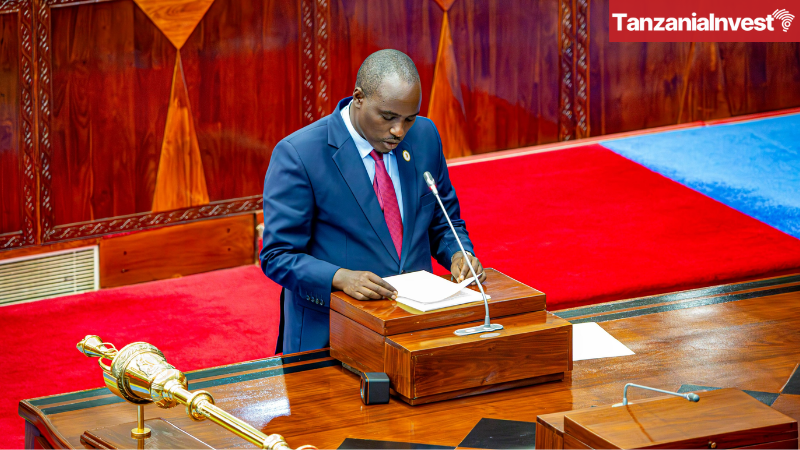
On April 28, 2025, Deputy Prime Minister and Minister of Energy, Dr. Doto Biteko, presented the Ministry of Energy’s 2025/2026 budget to the Parliament of Tanzania.
The budget is set at TZS 2.2 trillion, with 96.5% allocated for development projects and 3.5% for recurrent expenditure.
Dr. Biteko outlined the key priorities for the Ministry in the 2025/2026 financial year, which include strengthening power generation, transmission, and distribution. Additionally, the government plans to extend the national grid to the remaining regions of Rukwa, Kagera, Lindi, and Mtwara.

“Another key focus is to continue electrifying rural areas, mining regions, agricultural zones, industries, and water pumps, as well as healthcare centers to facilitate production activities and improve public service delivery,” said Dr. Biteko.
Further emphasis will be placed on ensuring reliable electricity supply for both economic and social development, including the ongoing implementation of the National Grid Improvement Project, as well as repairs and upgrades to power generation plants.
The budget will also prioritize the promotion of clean cooking energy use as part of the National Clean Cooking Energy Strategy (2024-2034) and the National Energy Plan (2025-2030).
Dr. Biteko mentioned other key priorities such as ensuring consistent oil and gas supply, supporting local participation in the energy sector, and enhancing capacity building and tools for improving operational efficiency.
In terms of achievements, Dr. Biteko reported that, in the 2024/2025 fiscal year, notable progress was made with the completion of the Julius Nyerere Hydroelectric Power Project (JNHPP) with a capacity of 2,115 MW. Additionally, transmission infrastructure, such as the 400 kV transmission line connecting Julius Nyerere Power Station to Chalinze, was completed.

Other accomplishments highlighted include increasing the power generation capacity connected to the national grid from 1,601.84 MW in 2020/21 to 4,031.71 MW and the extension of electricity to 12,318 villages in mainland Tanzania.
The Ministry has also achieved significant progress in expanding natural gas distribution, increasing the network from 102.54 kilometers in 2020/21 to 241.58 kilometers in April 2025, thus enabling gas supply to 1,514 homes, 13 institutions, and 57 industries.
Dr. Biteko also noted improvements in rural electrification, with electricity reaching 33,657 out of the targeted 64,359 sub-villages, representing 52% of the target.
In the gas sector, he emphasized the increased participation of Tanzanians in oil and gas exploration, with Tanzanian Petroleum Development Corporation (TPDC) raising its stake in the Mnazi Bay gas field from 20% to 40%, and the commencement of gas production licensing in the Ntorya field.
The Minister concluded by highlighting the government’s continued efforts to expand clean cooking solutions and energy access, including the distribution of 266,000 cooking gas cylinders and 5,000 efficient stoves.
The Chairman of the Parliamentary Energy and Minerals Committee, Hon. David Mathayo, commended the Ministry’s efforts, stating that the 2024/2025 budget was successfully implemented.
The Committee also provided recommendations for the 2025/2026 budget, including increasing the pace of project financing, addressing land compensation for affected communities, and accelerating the rehabilitation of energy infrastructure to ensure a reliable electricity supply for citizens
Want to know more about Energy in Tanzania? Our free overview of the Tanzania Business and Investment Guide 2026 covers Energy, plus key sectors and investment opportunities. The complete 141-page edition includes policies, taxation, key regulations, full macroeconomic data, and sources, and is also available at no cost upon completion of a short form.
Download Free OverviewGet the Full Edition for Free