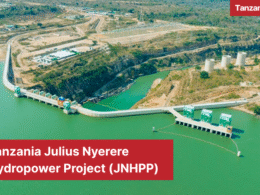


On 12th December 2018, Tanzania signed the much-awaited agreement to build the Stiegler’s Gorge Hydroelectric Power Station (SGHPS), on the Rufiji River, in the Selous Game Reserve, in southwestern Tanzania.
The deal worth USD 2.9 billion was signed by Dr. Tito E. Mwinuka, the Director General of the Tanzania Electric Supply Company (TANESCO), on behalf of the Ministry of Energy, and Ahmed Sadek Elsewedy, CEO of Elsewedy Electric, and Mohamed Mohsen Salaheldin Chairman of Arab Contractors, the two Egyptian companies that will construct the power dam in joint venture.
The hydropower plant is expected to be finalized in 42 months and should have the capacity to produce 2,115 MW by April 2022, dramatically increasing the country’s current power production capacity of 1,560 MW.

It will include a 400 KV substation and transmission line integrated into the national electricity grid.
The project will be entirely financed by the Government of Tanzania.
During the signing ceremony, Tanzania’s President Hon. John Magufuli commented that hydropower is cheaper than other sources of electricity and will stimulate economic growth in the country.
TANZANIA POWER
Tanzania has abundant energy resources such as hydro, natural gas, coal, uranium, wind, geothermal, biomass, solar, tidal and waves.
Tanzania has an installed power capacity of 1.5 GW of which hydroelectric 568 MW, thermal: 925 MW, and other renewables: 82.4 MW.

However, the actual power production varies, particularly when droughts disrupt hydropower electric generation; rolling blackouts are implemented as necessary.
Also, nearly a quarter of electricity generated is lost because of poor transmission infrastructure.
Though the country’s supply of electricity nearly doubled between 2005 and 2011, only about 20% of Tanzanians are on the electrical grid.
Want to know more about Energy in Tanzania? Our free overview of the Tanzania Business and Investment Guide 2026 covers Energy, plus key sectors and investment opportunities. The complete 141-page edition includes policies, taxation, key regulations, full macroeconomic data, and sources, and is also available at no cost upon completion of a short form.
Download Free OverviewGet the Full Edition for Free