


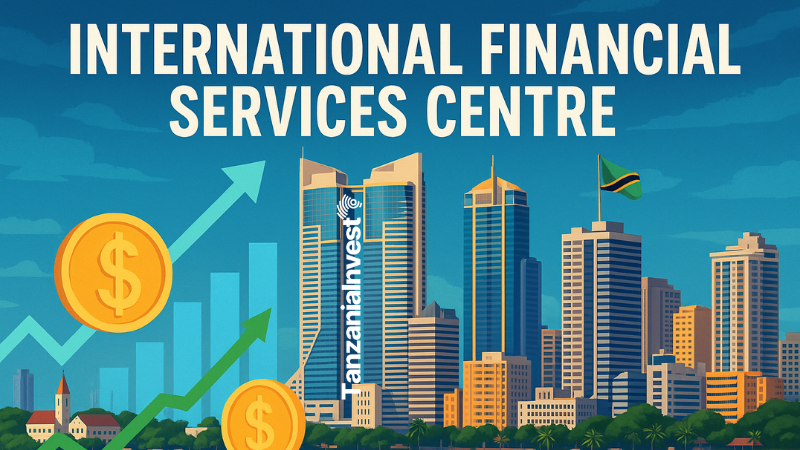
The National Business Council (TNBC) announced that it is working to establish an International Financial Services Centre (IFSC) in Tanzania to attract local and international capital for large-scale investment projects.
The initiative is being developed through TNBC’s finance working group and aims to boost investment flows into strategic sectors and support Tanzania’s economic growth ambitions.
Speaking during the group’s second session held over the weekend, TNBC Executive Secretary Dr Godwill Wanga explained that the proposed centre is designed to mobilise capital for major development initiatives both inside and outside the country.

He noted that the centre would serve a broad range of financial and non-financial stakeholders, including banks, capital markets, and support service providers such as those in transport and hospitality, thereby enhancing the overall investment value chain.
Deputy Governor of the Bank of Tanzania (BoT), Sauda Msemo, said the centre fits the government’s long-term goal of increasing gross national income to USD 1 trillion by 2050.
She added that with sufficient capital, the IFSC would become a platform for mobilising funding for critical infrastructure and industrial projects, while also supporting the growth of exports and strengthening foreign currency reserves.
David Kafulila, Executive Director of Tanzania’s Public-Private Partnership (PPP) Centre, emphasized the need to go beyond conventional public financing models by attracting private investment.
He stated that reaching a USD 1 trillion economy would require reforms in legislation and public sector thinking, with all ministries encouraged to adopt PPP models that benefit from private sector efficiency and technology.

Kafulila also highlighted the importance of investor trust, noting that a government-backed financial hub could provide assurances around capital protection and governance.
Vincent Minja, President of the Tanzania Chamber of Commerce, Industry and Agriculture (TCCIA), confirmed that stakeholders welcomed the proposal and expressed hope for a swift approval by the relevant authorities.
If implemented, the IFSC would mark a strategic move toward positioning Tanzania as a regional financial hub and accelerating its path toward middle-income status.
The National Business Council (TNBC) is a public-private dialogue platform chaired by the President of Tanzania, focused on facilitating investment and economic development.
The proposed IFSC would join a small number of African countries developing financial centres to attract global capital and expand access to finance for development.
Want to know more about Finance in Tanzania? Our free overview of the Tanzania Business and Investment Guide 2026 covers Finance, plus key sectors and investment opportunities. The complete 141-page edition includes policies, taxation, key regulations, full macroeconomic data, and sources, and is also available at no cost upon completion of a short form.
Download Free OverviewGet the Full Edition for Free