

Industry
Tanzania's industrial sector contributed 7.3% of GDP in 2024 and 6.9% in the first nine months of 2025, growing 5.5% over the same period, with manufactured exports reaching USD 1.5 billion and an Index of Industrial Production rising 7.1% quarter-on-quarter in Q3 2025.
Tanzania's manufacturing sector is at an early stage of development with limited value addition, dominated by simple consumer goods produced by small-scale establishments—yet its contribution to GDP has remained broadly stable, rising from 7% in 1990 to 8.4% in 2021[3] and standing at 7.3% in 2024 and 6.9% in the first nine months of 2025[2].
Manufacturing employs 661,449 people, representing 2.7% of national employment, and is structured around five core components: agribusiness and chemicals (sugar, cashews, edible oils, beverages, fertilizers), Construction Materials (Cement, tiles, Iron sheets, glass), engineering and technology (vehicles, lithium batteries, hospital equipment, agricultural machinery), Consumer Goods (FMCG, processed foods, household and personal care, textiles), and pharmaceutical production.
Industrialization is anchored by Vision 2050, FYDP IV, the Integrated Industrial Development Strategy (IIDS), and the SEZ/EPZ framework administered by TISEZA—Tanzania has 34 registered Special Economic Zones plus 31 privately owned Industrial Parks[11], with major flagship projects including the Liganga-Mchuchuma integrated iron and steel complex, the Maganga Matitu Iron ore project, the Dodoma Critical Minerals Technology Hub, and revitalized textile mills at Urafiki and MWATEX serving as anchor integrated industrial parks.
Industrial Production
Tanzania's industrial sector contributed 7.3% of GDP in 2024 and 6.9% in the first nine months of 2025, growing 5.5% over the same period[2].
Manufacturing employs an estimated 661,449 people, representing 2.7% of total national employment of 24,695,842[4].
The Index of Industrial Production (IIP) rose from 106.4 in Q2 2025 to 113.9 in Q3 2025, a 7.1% quarter-on-quarter increase[5]—driven by mining and quarrying (+7.9%), manufacturing (+7.1%), water/sewerage/waste (+6.2%), and electricity/gas/steam (+5.8%).
Within manufacturing, IIP rose 7.1% QoQ from 107.4 to 115.0—tobacco manufacturing surged 46.3%, basic metals 16.2%, and non-metallic mineral products 14.3%, while fabricated metal products declined 10.7%, basic pharmaceutical products 9.1%, and furniture manufacturing 8.7%.
Year-on-year manufacturing IIP for Q2 2025 vs Q2 2024 declined 1.7%—with contractions in paper and paper products (-21.9%), fabricated metal products (-22.4%), and textiles (-19.8%) offset by growth in basic metals (+19.1%), electrical equipment (+16.6%), and coke and refined petroleum (+10.4%).
Food and beverages account for nearly 50% of manufacturing sector employment in 2020 and lead in value added and growth contribution, followed by furniture, textiles, and non-metallic products, with production dominated by simple consumer goods from small-scale establishments including food, beverages, textiles, tobacco, wood products, rubber products, Iron, steel, and fabricated metal products.
Agribusiness and Chemicals
Sugar production reached 431,736.74 tonnes in the 2024/2025 season, achieving self-sufficiency for regular domestic use[1], with newly built Mkulazi and Bagamoyo sugar factories adding capacity.
Tanzania still imports 250,000 tonnes of industrial sugar annually, and three new sugar factories in Tanga region are under Government coordination to produce regular and industrial sugar.
Tanzania is the world's sixth-largest cashew producer and second in Africa, with raw cashew production reaching 528,263 tonnes in 2024/2025, of which 406,362 tonnes were sold via the Tanzania Mercantile Exchange (TMX) digital auction generating TZS 1.46 trillion.
Edible oils processing covers sunflower, cottonseed, sesame, peanut, and avocado oils, with domestic production of 396,335 tonnes falling short of national demand of approximately 650,000 tonnes, leaving a 253,665-tonne deficit.
Beverages constitute the fastest-growing manufacturing segment, driven by urbanization and supermarket culture—the non-alcoholic segment produces carbonated soft drinks (soda), syrup concentrates, juices, energy and sports drinks, teas, coffee, and bottled water, while the alcoholic segment uses Malt from barley, plus corn and grapes to produce beer (valued at USD 1.24 billion in 2023[5]), wine, and liquor[6].
Fertilizer production reached 158,628 tonnes in 2024/2025 across 36 factories, led by the new Itracom factory and the expanded Minjingu factory, with average application of 24 kg/hectare against demand of 1,000,000 tonnes/year and total availability of 1,213,729 tonnes in 2024/2025[7].
Construction Materials
Cement production from 14 factories reached 10.9 million tonnes in 2024 against domestic demand of approximately 8,500,000 tonnes, with the surplus exported to neighboring countries.
Tile production from two large factories has installed capacity of 149,000 m²/day and current output of 125,000 m²/day against domestic demand of 80,000 m²/day, leaving a 45,000 m²/day surplus exported to Kenya, DRC, Malawi, Zambia, and Uganda.
Iron sheets are produced by 54 factories generating 260,000 tonnes/year of colored sheets against 130,000-tonne domestic demand, leaving a 130,000-tonne export surplus, while the Maganga Matitu Iron project holds 100 million tonnes of reserves with planned production of 1 million tonnes/year of iron ore for local iron and steel production, reducing reliance on imported scrap metal.
Glass and glassware production spans four factories with combined installed capacity of 1,300 tonnes/day and output of approximately 445,000 tonnes annually, sourcing 95%+ of raw materials (dolomite, silica sand, limestone, feldspar) locally and generating massive export surpluses.
Engineering and Technology
Tanzania hosts 13 vehicle assembly plants—two focused on complete trucks and 11 on trailers—with GF Vehicle Assemblers operating on TZS 13 billion investment and 2,500 units/year installed capacity, having assembled 3,445 vehicles as of March 2025 with 167 direct and 43 indirect jobs.
Lithium-ion battery manufacturing is emerging through private sector investment with international support, introducing advanced technologies for local production aligned with Tanzania's critical minerals strategy.
Hospital equipment manufacturing covers morgue refrigerators, hospital beds, stretchers, theatre trolleys, and autoclaves, driven by Government efforts to reduce medical equipment import costs.
Agricultural machinery production includes threshers, palm oil processing machines, sub-soilers, and seed planters, alongside industrial spare parts manufactured for the sugar, brewing, and leather sectors.
Consumer Goods
Fast-moving consumer goods (FMCG) and light manufacturing produce a wide range of everyday products supplying both domestic and regional markets.
Processed foods cover coffee roasting and packaging for retail and export, frozen foods, fortified foods, and milled agricultural products, alongside large-scale sugar, edible oils, and beverages.
Floriculture and botanical extracts operations in the northern highlands around Arusha and Kilimanjaro process and package cut flowers and extract botanical oils.
Household and personal care manufacturers produce solid and liquid soaps, laundry detergents, cosmetics, and essential oils, while textiles and apparel firms use locally sourced cotton to manufacture consumer textiles, ready-made clothing, and essential health commodities such as treated mosquito nets.
Pharmaceutical
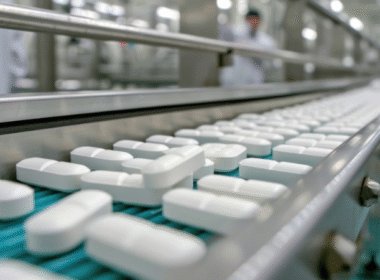
Tanzania's pharmaceutical sector is highly dependent on imports—approximately 80% of health commodities are sourced from foreign countries, mainly India and China[8], with an estimated annual import bill of USD 1 billion[9].
Domestic pharmaceutical manufacturing remains at a nascent stage but is expanding—in 2021 the Government expanded the Medical Stores Department (MSD) mandate to engage in production, and as of 2024, 47 registered large pharmaceutical manufacturing industries meet regulatory requirements, producing antibiotics, intravenous fluids, and veterinary medicines[10].
A Ministry of Health 2025 directive launched a national strategy to expand local pharmaceutical production from the current 10% to 65% by 2030[12], creating significant opportunities for greenfield investment, technology transfer, and joint ventures.
Policies
The Ministry of Industry and Trade (MIT) drives industrial revitalization, infrastructure development, and technological innovation, while Vision 2050 positions manufacturing as a primary driver for transitioning Tanzania into a diversified, resilient economy—reducing reliance on raw exports, expanding local value addition, and triggering multiplier effects in agro-processing and Construction Materials.
FYDP IV is the medium-term execution strategy for Vision 2050—targeting an average annual manufacturing growth rate of 9% and a sustained 15% sectoral contribution to GDP by 2031, positioning Tanzania as the leading manufacturing hub in the EAC.
Vision 2025, the Integrated Industrial Development Strategy (IIDS) 2025, and FYDP III guided the earlier push toward resource-based industrialization—IIDS targeted 23% manufacturing GDP share, USD 16.8 billion gross manufacturing value, and USD 6.7 billion manufactured exports, while FYDP III set a current target of 8.5% manufacturing GDP share.
The Mini Tiger Plan 2020, adopted in 2005, established an Asian-style model for FDI attraction and export promotion through Industrial Parks, SEZs, and Export Processing Zones (EPZ).
Tanzania has 34 registered Special Economic Zones[11]—of which 17 are publicly owned through TISEZA, 11 privately owned, four owned by local Governments, and two owned by NSSF and Tanzania Ports Authority (TPA)—plus 31 privately owned Industrial Parks registered with TISEZA, with fiscal and non-fiscal incentives applying across construction, operation, and marketing stages.
FYDP IV interventions for deepening Industrialization include dedicating 50% of all EPZs to high-tech and mineral-based production, establishing a Critical Minerals Technology Hub in Dodoma for lithium-iron battery and green technology sectors, and scaling local steel, automotive, and electronics to capture 40% of regional exports.
Local integration measures include a 30% local content quota in public procurement for certified domestic manufacturers and raising Manufacturing Value Added (MVA) for MSMEs from 12% to 22% by June 2031, while targeted revitalization revives defunct agricultural facilities such as the Urafiki and MWATEX mills as anchor integrated textile parks, alongside tax credits for firms achieving international environmental certifications.
The National Development Corporation (NDC) is the Government's primary strategic investment arm—mandated to establish basic and strategic industries in partnership with the private sector across mining and mineral processing, biotechnology, pharmaceuticals, large-scale industrial parks, agriculture and agro-industry, energy and power projects, and advanced manufacturing and engineering—while the Confederation of Tanzania Industries (CTI) is the primary advocacy body for the manufacturing sector, ensuring industrial policy aligns with private enterprise realities.
A Ministry of Health 2025 directive targets local pharmaceutical production growth from 10% to 65% by 2030[12].
Investment Opportunities
Agro-industries and agro-processing opportunities are concentrated in edible oil production to reduce reliance on imported cooking oils, and cashew nut processing where Tanzania is among the world's leading producers, allowing expanded local processing and export of kernels.
Food and beverages opportunities span fruit and vegetable preservation, oils and fats, dairy products, grain milling, starches, animal feeds, bread, sugar, chocolate, pasta, coffee, nuts, spices, bottled and canned soft drinks, fruit juices, beer, and wine.
Textile and apparel investment leverages Tanzania's position among Africa's leading cotton producers across the full value chain from ginning to spinning, weaving, and garment manufacturing with fully integrated textile mills.
Construction materials and basic industries offer openings in iron and steel including downstream fabrication, plus cement and ceramics production supported by sustained growth in infrastructure and real estate, while automotive and engineering covers motor vehicle and motorcycle assembly and spare parts production for domestic and regional markets.
Pharmaceuticals opportunities include greenfield manufacturing plants, expansion and modernization of existing facilities, joint ventures with local firms, technology transfer, quality-control and testing laboratories, and production of raw materials and active pharmaceutical ingredients.
Special economic and export processing zone infrastructure enables investors to develop industrial parks and supporting utilities—power generation, water supply, sewerage treatment, and industrial buildings—either as fully private developments or through public-private partnerships under a consolidated one-stop investment authority.
Zone operations allow manufacturers to lease or purchase factory sheds or industrial plots under SEZ/EPZ licensing schemes with fiscal and non-fiscal incentives across priority sectors—agro-processing, textiles and garments, fertilizer and chemicals, light manufacturing, iron and steel, paper, pharmaceuticals and medical devices, lapidary and gemstone processing, construction materials, and ICT—alongside zone services in logistics, waste management, telecommunications, financial services, healthcare, and catering, with further scope for SMEs to integrate into regional and global value chains.
Last Update: May 2026
References
- https://www.kilimo.go.tz/uploads/speeches/sw-hotuba_yabajeti25_26.pdf (Guide reference #65)
- https://www.mifugouvuvi.go.tz/uploads/documents/en-1747999275-hotuba_mifugo_uvuvi_online2_compressed.pdf (Guide reference #67)
- https://www.nbs.go.tz/uploads/statistics/documents/en-1764002949-Employment%20and%20Economic%20Activities%20in%20Tanzania.pdf (Guide reference #125)
- https://www.nbs.go.tz/uploads/statistics/documents/en-1765404046-2025Q3%20IIP%20RELEASE.pdf (Guide reference #126)
- https://www.wm-strategy.com/news/tanzania-beer-market-size-2016-2020 (Guide reference #127)
- https://www.imarcgroup.com/tanzania-spirits-market (Guide reference #128)
- https://www.viwanda.go.tz/uploads/documents/en-1747115028-hotuba_online_compressed.pdf (Guide reference #129)
- https://www.tmda.go.tz/uploads/publications/en1662629523-Action%20Plan%20for%20Promotion%20of%20Domestic%20Manufacturers__Final_Doc.pdf (Guide reference #130)
- https://www.thecitizen.co.tz/tanzania/news/national/tanzania-courts-investors-to-bolster-medicine-production-5332034 (Guide reference #131)
- https://www.tmda.go.tz/uploads/publications/en1754394199-ANNUAL%20REPORT224.pdf (Guide reference #132)
- http://planninginvestment.go.tz/uploads/documents/sw-1725983957-GUIDE%20LINE%20-%20PRINT%20READY.pdf (Guide reference #136)
- https://www.moh.go.tz/news-single/tunataka-tuwe-huru-kuzalisha-dawa-zetu-wenyewe-waziri-mchengerwa (Guide reference #137)
Want to know more about Industry in Tanzania? Our free overview of the Tanzania Business and Investment Guide 2026 covers Industry, plus key sectors and investment opportunities. The complete 141-page edition includes policies, taxation, key regulations, full macroeconomic data, and sources, and is also available at no cost upon completion of a short form.
Download Free OverviewGet the Full Edition for Free