

The Government of Tanzania has announced the establishment of a modern, large-scale critical minerals technology center and the procurement of advanced mineral research equipment to accelerate the nation’s mining sector.
This strategic development is a direct implementation of the “Madini Vision 2030,” which aims to transform the country into a leading hub for mineral processing and research.
The project, which is expected to cost approximately TZS 40 billion (USD 16.5 million or 21.8 billion Korean Won), is the result of a partnership between the Geological Survey of Tanzania (GST) and the Korea Institute of Geoscience and Mineral Resources (KIGAM).

The initiative focuses on enhancing the technical capacity of the country to manage and process strategic minerals essential for global green energy transitions.
Speaking during a meeting with a six-member delegation from South Korea led by KIGAM expert Mr. Seong-Jun Cho, Tanzania’s Minister for Minerals, Hon. Anthony Mavunde (MP), detailed the scope of the project.
The collaboration will include the establishment of the technology center, a joint digital mineral resource information system, capacity building for local experts, and the implementation of Environmental, Social, and Governance (ESG) systems in mining.
The project is slated to run for five years, specifically from 2027 to 2031, with a primary focus on nickel and other strategic metals.
Minister Mavunde also highlighted that the center will provide specialized training for small-scale miners to improve their efficiency and productivity in the field.

“The President has directed the Ministry of Minerals to ensure that we increase the researched area to reach 50% by the year 2030,” stated Hon. Mavunde.
“This project with our partners from South Korea clearly demonstrates the commitment and intent of our government to achieve the goals we have set for ourselves. In addition to the benefits I have mentioned, this project will also provide opportunities for small-scale miners to receive special training that will increase the efficiency and productivity of their activities,” the Minister added.
For his part, Mr. Seong-Jun Cho from KIGAM expressed his gratitude for the government’s cooperation and promised that the project would significantly benefit the nation throughout its implementation.
Tanzania possesses significant deposits of critical minerals essential for green energy and high-tech applications. These include nickel, cobalt, graphite, rare earth elements (REEs), lithium, and heavy mineral sands containing titanium and zirconium.
The mining policies are guided by the Madini Vision 2030 to increase wealth creation from mining activities and provide opportunities for Tanzanians, specifically women, youth, and people with special needs.
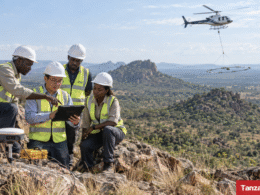
A key focus is the expansion of geological knowledge through comprehensive geoscientific surveys, including a high-resolution airborne geophysical survey intended to cover at least 50% of the country by 2030, up from the current 16%, to identify new mineral potential and attract investments.
Want to know more about Mining in Tanzania? Our free overview of the Tanzania Business and Investment Guide 2026 covers Mining, plus key sectors and investment opportunities. The complete 141-page edition includes policies, taxation, key regulations, full macroeconomic data, and sources, and is also available at no cost upon completion of a short form.
Download Free OverviewGet the Full Edition for Free