
Booming Tanzanian Mining Industry

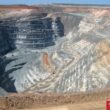
According to recent reports released by Tanzania Chamber of Mineral and Energy (TCME), Tanzania will accelerate several new mines increasing the mining industry production and GDP contribution to the economy.

The new mines will change the mining sector landscape by increasing employees in the sector, accelerate government revenues and improve infrastructure in the country.

TCME Chairman Joseph Kahama said “Depending on fiscal policies, regulatory frameworks and mineral commodity prices it is anticipated that several new major mines will be brought into production in the next five years or so. Once they start operating Tanzania will see a major economic transformation”.

According to Chairman Kahama the Mantra Mkuju River project is one of the mines expected to start operation soon.

Currently there are 434 nuclear power reactors globally, and according to the World Nuclear Association, 650 nuclear reactors will be operating by 2032, this results in uranium requirements worldwide increasing to 98,000 tonnes and 136,000 tonnes by 2035.

“This presents great opportunity for uranium developers in the country as there will be a ready market for the concentrate (yellow cake),” Kahama noted.

Tanzania will soon be joining the League of African Uranium Countries and is expected to be number three on the list of the continent’s top uranium producers with future FDI inflows predicted at 1 billion USD.


Want to know more about Mining in Tanzania? Our free Tanzania Business and Investment Guide 2026 covers Mining, plus regulations, key sectors, and investment opportunities — all in one place.

Download Free Guide
Related Posts
Tanzania Helium One Agreements Signing Southern Rukwa Project
Read More

Tanzania Finalises Agreements for First Helium Mining Licence, Clearing Southern Rukwa Project for Development

Helium One Global (AIM: HE1) and the government of Tanzania have executed the Framework Agreement and Shareholders' Agreement supporting Tanzania's first-ever helium mining licence, activating the 480 km² Southern Rukwa Project under joint venture Songwe Helium Ltd, in which Helium One holds an 83% interest. The company has also appointed PVE Consulting to lead the farm-out process for the project, which flowed 5.5% helium to surface during its 2024 extended well test.
Dodoma Region Investment Guide
Read More

Tanzania Government Calls for Investment in Dodoma Mining, Agriculture, Tourism and Trade

Tanzania's Finance Minister and the Dodoma Regional Commissioner have jointly called on investors to tap into opportunities in Dodoma's mining, agriculture, tourism, and trade, with mining flagged as the region's largest potential through value addition. Specific openings include a proposed dry port to leverage Dodoma's central location at the heart of Tanzania, the construction of five-star hotels and international conference centres, and the development of mineral processing facilities, alongside the rollout of the Tourism Development Strategy for Dodoma Region 2025–2030.
Anthony Mavunde Parliament Bunge
Read More

Tanzania’s 2026/27 Mining Budget Sets Ambition for Critical Minerals Leadership and Top-4 Global Niobium Producer Status

Tanzania's Ministry of Minerals has tabled a TZS 174.98 billion budget for FY 2026/27, with a revenue collection target of TZS 1.41 trillion from a sector whose GDP contribution has climbed to 11.9% and whose exports rose 31.1% to USD 5,401.9 million in 2025. The budget prioritises critical and strategic minerals, the Panda Hill niobium project expected to make Tanzania a top-4 global producer, the Buzwagi value-addition hub, and expanding geophysical survey coverage to 50% of the country by 2030.
Tanzania mineral processing
Read More

Tanzania to Build Mineral Processing Center in Shinyanga to Boost Value Addition

The Tanzanian government plans to establish a Mineral Processing Center in Mwakitolyo, Shinyanga Region, to deepen mineral value addition and expand local participation in the mineral value chain. Deputy Minister for Minerals Dr. Steven Kiruswa highlighted the initiative in Parliament, emphasizing the need to build technical capacity among youth and women from exploration to processing.