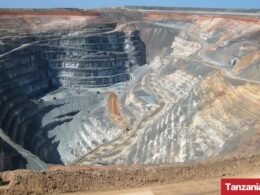


Australian graphite developer Kibaran Resources (ASX:KNL) announced that recent industrial scale tests have confirmed the excellent suitability for use in lithium-ion batteries of the graphite produced from its Epanko project in southeast Tanzania.
The results of the tests show that the Epanko graphite has the requisite physical and chemical properties for use in high quality lithium-ion batteries (graphite is used in lithium-ion battery as the anode).
Kibaran notes that key properties of the Epanko graphite including particle size distribution, tap density and impurity levels are in-line and meet leading battery anode manufacturer specifications.

Andrew Spinks, Managing Director of Kibaran, commented: “We continue to be encouraged by positive
feedback from leading battery anode manufacturers as we advance through the negotiation process. Our spherical graphite was produced from large scale industrial-sized facilities, rather than lab-scale testwork, thereby allowing battery anode manufacturers to determine real world performance and replicability of the material. Kibaran is well positioned to become a leading producer of graphite products with all requisite mining studies completed for Epanko, a granted mining licence and attracted “blue chip” offtake partners […]”
Kibaran recently started studies on expanding the production capacity of the Epanko Graphite Project by 50% from 40,000 tons per annum (tpa) of graphite concentrate to 60,000tpa.
The company decided to start the expansion studies after securing binding agreements covering all of the project’s 40,000tpa forecasted production.
Kibaran already has binding agreements for 20,000tpa with German company ThyssenKrupp, 10,000tpa with European graphite trader and 14,000tpa with Japanese trading giant Sojitz.

Tanzania Graphite
Tanzania’s largest graphite deposits are located in the central and east southern regions of the country.
Graphite discoveries in Tanzania come mainly from Australia based graphite developers, Magnis Resources (ASX:MNS), Volt Resources (ASX:VRC) and Kibaran Resources (ASX:KNL).
Want to know more about Mining in Tanzania? Our free overview of the Tanzania Business and Investment Guide 2026 covers Mining, plus key sectors and investment opportunities. The complete 141-page edition includes policies, taxation, key regulations, full macroeconomic data, and sources, and is also available at no cost upon completion of a short form.
Download Free OverviewGet the Full Edition for Free