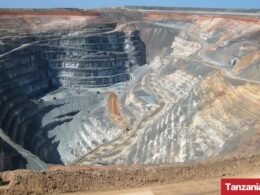


Tanga city inaugurated a new mineral market for gold and gemstones on September 18, 2025, providing small-scale miners with a formal platform to sell their products securely and at fair prices.
The market aims to reduce challenges miners face in finding buyers, prevent losses from smuggling, and ensure the mineral value chain remains within the region.
It will also serve as an information hub for miners and traders, facilitating transparent trade and price discovery.

The Regional Mining Officer for Tanga, Engineer Laurent Bujash, said the market will help keep the mineral value chain in Tanga: “We invite miners to bring gold and gemstones to sell through this formal system, ensuring better profit and business security. This market is expected to become a core driver of mineral development in Tanga and strengthen the local value chain.”
A representative of local mineral traders, Mndambi Mrinji, described the initiative as a response to long-standing requests from miners for a centralized trading point. “These efforts by the Regional Mining Officer aim to ensure that services are centralized and easily accessible near his office. We thank the government for this initiative that helps small-scale miners like us,” Mrinji said.
Tanga as an Industrial Mineral Hub
Tanga, a coastal region in northeastern Tanzania, is increasingly recognized as a hub for industrial mineral processing. Factories in the region process dolomite, limestone, gypsum, kaolin, feldspar, graphite, and salt into products for construction, fertilizer, industrial use, and building materials.
The Mayanga plant in Handeni provides a stable market for small-scale dolomite miners from Kwedikwazu and nearby areas, giving them better prices and a secure outlet for their products. The facility has also created employment for local residents and supported small businesses involved in transport, services, and food supply.

Tansalt in Tanga city processes salt for domestic, industrial, and iodized use. It purchases raw salt from small-scale miners across Tanga and the coastal region, distributes products nationally and regionally, and has increased local income while contributing to the fight against iodine deficiency.
Muwa Trading Tanzania Limited operates a sand washing plant, supplying high-quality sand for major government projects, including Tanga Port and the East African Crude Oil Pipeline. The plant removes impurities such as soil and roots, transforming low-value raw sand into a high-quality industrial material.
Linking Minerals to Agriculture and Industry
Dolomite and other industrial minerals also support agriculture through fertilizer production.
Dolomite improves soil calcium and magnesium content, corrects acidity, and enhances crop yields, helping secure food production.
According to Rishit Lalseta, Director of Tanga Mining Limited, domestic fertilizer demand is high, and factories in Tanga are planning for future regional exports to generate foreign currency while supporting national food security.
The processing of sand, salt, and other minerals demonstrates how Tanga’s mineral sector links mining to construction, industrial activity, and agriculture, creating integrated value chains that benefit both small-scale miners and the wider economy.
Economic Contribution and Government Revenue
Engineer Bujashi noted that more than 80% of Tanga’s mineral revenues come from industrial minerals.
Within the first two months of the 2025/26 financial year, the region collected 25% of its TZS 11 billion target, demonstrating the sector’s contribution to government revenue and local development.
The expansion of factories and the launch of the mineral market have created jobs for youth and local residents, strengthened value chains, and increased opportunities for small-scale miners and service providers.
Factories producing industrial minerals for construction, fertilizer, and industrial use have boosted trade, transport, and ancillary services, enhancing the economic impact across the region.
Want to know more about Mining in Tanzania? Our free overview of the Tanzania Business and Investment Guide 2026 covers Mining, plus key sectors and investment opportunities. The complete 141-page edition includes policies, taxation, key regulations, full macroeconomic data, and sources, and is also available at no cost upon completion of a short form.
Download Free OverviewGet the Full Edition for Free