
Pharma
Tanzania's pharmaceutical operators sit within a global market valued at approximately USD 1.48 trillion in 2022, the most recent full-market figure available for benchmarking domestic ambitions.[1]
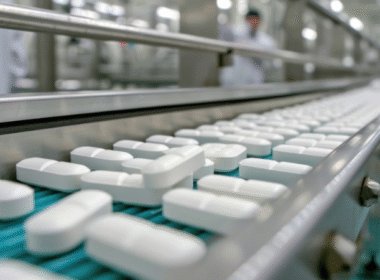
The pharmaceutical industry discovers, develops, produces, and markets medications used to cure or prevent disease and to alleviate symptoms of illness or injury.[1]
For Tanzania, this global sector represents both an essential public health input and a strategic manufacturing frontier where local production, distribution, and regulatory alignment intersect with international standards on efficacy testing, safety evaluation, and marketing of medicines.[1]
Contents
Tanzania's Position in the Global Pharma Market
The global pharmaceutical market was valued at approximately USD 1.48 trillion in 2022, providing the reference scale against which Tanzania's local manufacturing, importing, and distribution activities are measured.[1]
The sector recorded a compound annual growth rate of 1.8% in 2021, a figure that includes the effects of the COVID-19 pandemic and continued expansion from 2020.[1]
For Tanzanian producers and investors, these numbers highlight the size of the international market that can be addressed through exports, licensing, and regional partnerships across East Africa.
Generic and Branded Segments Shaping Local Access
Generic drugs are typically not protected by patents, whereas branded drugs are covered by patents, and this distinction defines much of Tanzania's affordability agenda.[1]
Access to essential medicines in Tanzania depends heavily on generics that can be produced or imported at lower cost, which makes generic manufacturing the most immediate industrial entry point.
The commercial environment for Tanzanian pharmaceutical operators is shaped by the interplay between patented innovator products and off-patent generics circulating through the public and private supply chains.[1]
Manufacturing Subdivisions Relevant to Tanzania
The industry's subdivisions include distinct areas such as biologics manufacturing and total synthesis, both of which are relevant to Tanzania's ambitions to expand domestic production capacity.[1]
Generics and Finished Dose Forms
Generic finished dose manufacturing remains the most accessible tier for Tanzania, aligning with the country's need for affordable medicines and its potential to supply regional markets.
Biologics and Total Synthesis
Biologics and total synthesis represent higher-value tiers of the industry, requiring more sophisticated capabilities in chemistry, biology, and industrial infrastructure to become viable.[1]
Historical Trajectory and Lessons for Tanzania
The pharmaceutical industry, as an intellectual concept, arose in the middle to late 1800s in nation-states with developed economies such as Germany, Switzerland, and the United States.[1]
The industry evolved alongside advances in chemistry, biology, and industrial manufacturing capacity in those early hubs.[1]
For Tanzania, this trajectory illustrates how sustained investment in research, quality standards, and industrial infrastructure has enabled certain countries to become dominant global suppliers, offering a reference model for building local capabilities.
Regulatory Framework and Access to Medicines
The pharmaceutical industry is subject to a variety of laws and regulations that govern the patenting, efficacy testing, safety evaluation, and marketing of drugs.[1]
Under the World Trade Organization framework, the TRIPS Agreement can and should be interpreted and implemented in a manner supportive of members' right to protect public health and, in particular, to promote access to medicines for all.[5]
Each WTO member has the right to grant compulsory licences and the freedom to determine the grounds upon which such licences are granted, a flexibility of direct relevance to Tanzania's public health strategy.[5]
Under the Doha Declaration, least-developed country members were not obliged, with respect to pharmaceutical products, to implement or apply Sections 5 and 7 of Part II of the TRIPS Agreement until 1 January 2016, a transition period that shaped Tanzania's early regulatory positioning.[5]
Investment Opportunities in Tanzania's Pharma Sector
Tanzania's participation in a global pharmaceutical market valued at approximately USD 1.48 trillion in 2022 signals significant room for investment across the value chain, from active ingredient sourcing to finished dose manufacturing.[1]
Generic drug production is a particularly attractive entry point, given that generics are typically not protected by patents and can be produced competitively for both domestic use and regional export.[1]
Biologics manufacturing and total synthesis, identified as distinct subdivisions of the industry, present higher-value opportunities for investors willing to develop advanced production capabilities in Tanzania.[1]
The steady global growth from 2020 and the 1.8% CAGR recorded in 2021 despite the COVID-19 pandemic underscore the resilience of pharmaceutical demand, offering long-term visibility for capital deployment in the sector.[1]
Last Update: July 2026
References
- https://www.cdc.gov/nchs/data/nvsr/nvsr47/nvs47_28.pdf
- #09-038: Eli Lilly and Company Agrees to Pay $1.415 Billion to Resolve Allegations of Off-label Promotion of Zyprexa (2009-01-15)
- https://obamawhitehouse.archives.gov/sites/default/files/microsites/ostp/pcast-fda-final.pdf
- What is Open Payments? | CMS
- WTO | Ministerial conferences - Doha 4th Ministerial - TRIPS declaration
- Making the first anti-depressant: amphetamine in American medicine, 1929-1950 - PubMed
Want to know more about Pharma in Tanzania? Our free overview of the Tanzania Business and Investment Guide 2026 covers Pharma, plus key sectors and investment opportunities. The complete 141-page edition includes policies, taxation, key regulations, full macroeconomic data, and sources, and is also available at no cost upon completion of a short form.
Download Free OverviewGet the Full Edition for Free