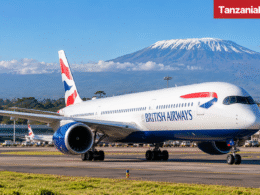


The Tanzania aviation industry will soon receive an increase in the availability of domestic flights within the country as Community Airlines, a budget airline that began operations earlier this year and later suspended services for reasons that were not made public, is preparing to begin offering flights again.
Community Airlines is completely owned and controlled by local shareholders within the country.
According to company officials, the airline was originally established for the purpose of satisfying a part of the new Tanzania aviation market economy that had previously remained largely untapped.
“We decided to establish the company to satisfy a new market which remains largely untapped […] to serve regular Tanzanians who were using buses to travel upcountry,” said Community Airlines Chief Executive Officer Paul Chizi in a January interview with East African Business Week.

“That’s the reason why we are charging low fares – and we feel that, by doing so, this will help to increase the national income,” Mr. Chizi continued.
The structure and services of the airline is said to be both competitive and affordable for the large part of the Tanzanian community, regardless of their income.
Compared to other airlines, fares for this budget airline were significantly reduced.
For example, at the time services for the airline were suspended the price for a single fare, including taxes, from Dar es Salaam to Kilimanjaro Airport was approximately Tsh49, 000 and from Dar es Salaam to Mwanza was approximately Tsh69, 000.
The budget airline reportedly charged Tsh178, 000 for a return-ticket from Dar-Mwanza, while other airlines were charging between Tsh200, 000 and 350,000 for a return flight with the same route.

In spite of these low fares, however, reports indicate that Community Airlines was able to turn a profit.
Local radio advertisements have begun indicating that the airline will begin operations again “very soon.”
According to a recent report by East African Business Week, the airline will be fully operational as early as next month, along with the big aircraft that is expected to arrive in the country.
In their report, East African Business Week spoke with a senior official from Community Airlines who said that the company is planning to operate flight routes between Mwanza, Musoma, Bukoba, Shinyanga and Kogoma.
“We are starting with a small aircraft that will operate in the Lake Zone,” said the company official, who wished to remain anonymous.
It is unknown from where the company has hired this small aircraft, however, the official did indicate to East African Business Week that negotiations to hire a larger aircraft, specifically a Boeing, had already been concluded.
Want to know more about Transport in Tanzania? Our free overview of the Tanzania Business and Investment Guide 2026 covers Transport, plus key sectors and investment opportunities. The complete 141-page edition includes policies, taxation, key regulations, full macroeconomic data, and sources, and is also available at no cost upon completion of a short form.
Download Free OverviewGet the Full Edition for Free