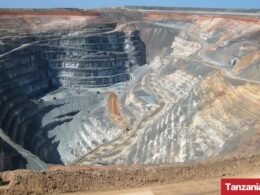



The Tanzania Chamber Of Minerals And Energy (TMCE) has issued a press statement to contradict the false allegations that mining companies have not been paying taxes in Tanzania.
“Between 2009 and 2015, the Tanzania Minerals Audit Agency, an arm of the Ministry of Energy and Minerals, reported that these companies collectively paid over USD390 million (TZS 870 billion) in royalties, and USD 305 million (TZS680 billion) in corporation taxes, along with other significant taxes,” the statement reads.
TMCE also reminds that in 2015 alone, the five major gold mines and one diamond mine paid a total of USD 65.5 Million (TZS 146 billion) in royalties to Tanzania’s coffers and over USD 170 million (TZS380 billion) in other taxes. These amounts are expected to have increased in 2016.

In relation to the concerns that have been raised about mining companies incorrectly benefitting by getting VAT refunds, the Chamber clarifies that this is not true.
It explains that mining companies export all that they produce and, as such, like any other exporting industry, are categorized as zero rated under the VAT laws and are therefore eligible to get refunds of input VAT incurred on their purchases.
However, mining companies still pay VAT on specific categories not allowable to be claimed under the VAT law.
TCME also stresses that despite having legally binding agreements (MDA’s) with the Government of Tanzania for which the mining companies can draw various concessions in form of tax reliefs, mining companies have agreed to comply with a number of regulations imposed by the 2010 Mining Code, although most of them contravenes provisions of the MDA’s.
These includes companies no longer capping local service levies at USD 200,000 per annum, but rather paying 0.3% of turnover, as well as increasing the royalty that is paid from 3% of net back value to 4% of gross value.

Several other fiscal stabilization provisions have also been removed from these agreements over time and through various contracts review committees that were formed by the Tanzanian Government.
In relation to corporate tax, the Chamber reminds that large-scale mines are complex operations that require huge capital investment and therefore it takes many years before the investors can recoup their investment and start generating taxable profits.
Furthermore, the point in time from which corporate tax starts to be paid may deviate from the feasibility study forecast due to declines or increases in sale prices or cost of inputs.
However, during the period of recouping the amount invested, the mines do continue to contribute to the Government coffers and to the local economy by paying indirect taxes like import duties, excise duties, skills development levies, service levies, withholding taxes and royalties, as well as PAYE and social security contributions.
The statement concludes that the Chamber is committed to co-operation and open dialogues with the Government of Tanzania on these and other issues that will pave the way for the country and its people to realize the maximum potential of the mining industry, which if well managed can accommodated the potential for more local and foreign investment.
Want to know more about Mining in Tanzania? Our free overview of the Tanzania Business and Investment Guide 2026 covers Mining, plus key sectors and investment opportunities. The complete 141-page edition includes policies, taxation, key regulations, full macroeconomic data, and sources, and is also available at no cost upon completion of a short form.
Download Free OverviewGet the Full Edition for Free