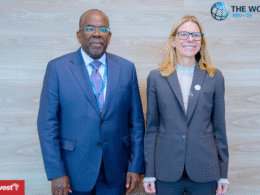



Tanzania’s President Samia Suluhu Hassan has inaugurated two commissions tasked with resolving land disputes and assessing the voluntary relocation process in the Ngorongoro Conservation Area (NCA).
The commissions were officially launched at the State House in Dar es Salaam as part of the government’s commitment to balancing conservation efforts with the welfare of local communities.
The formation of these commissions follows a pledge President Samia made on December 1, 2024, during a meeting with Maasai traditional leaders in Arusha. At the meeting, concerns were raised regarding land ownership, resettlement policies, and the environmental sustainability of the conservation area.

The first commission, chaired by Justice Dr. Gerald Ndika, will focus on resolving land disputes, while the second commission, led by Engineer Musa Iyombe, will review the progress and effectiveness of the voluntary relocation process.
The commissions include senior government officials, legal experts, and community representatives to ensure an inclusive and transparent approach.
During the inauguration, President Samia expressed confidence that the commissions would provide practical recommendations for addressing the challenges in Ngorongoro.
“These commissions will work closely with stakeholders to ensure that solutions are found that respect the rights of the people while preserving the Ngorongoro ecosystem for future generations. We must approach this matter with fairness and commitment to long-term sustainability,” President Samia stated.
Ngorongoro Conservation Area: A Vital Tourism Hub Facing Complex Challenges

The Ngorongoro Conservation Area, a UNESCO World Heritage Site, is renowned for its rich biodiversity and significant contributions to Tanzania’s tourism industry. In the fiscal year ending June 2023, the NCA attracted 752,215 visitors, generating a record Sh176 billion in tourism revenue. This underscores its status as one of the country’s leading tourist destinations.
Established in 1959, the NCA was designed as a multiple land-use area, allowing for the coexistence of wildlife conservation and human habitation. Over the decades, the human population within the area has grown substantially, from approximately 8,000 residents at its inception to over 100,000 today. This population increase, coupled with a rise in livestock numbers—surpassing one million—has intensified pressure on the ecosystem.
Conservationists express concern that overgrazing, deforestation, and other human activities are contributing to environmental degradation, potentially threatening the area’s wildlife and the tourism revenue it generates. In response, the government has initiated a voluntary relocation program aimed at reducing human impact on the environment while providing alternative livelihoods and improved living conditions for the affected communities.
However, this initiative has sparked debates over land rights, cultural preservation, and the adequacy of compensation and support for those who choose to relocate.
According to the Maasai International Solidarity Alliance (MISA), the Tanzanian Government intends to alienate more than 70% of all Maasai districts comprising Ngorongoro, Longido, Monduli, Simanjiro, and Kiteto, in fact privatizing land by creating 16 hunting blocks.
Maasai communities protested against this plan in large numbers on World Heritage Day, 18th April 2024, highlighting the link between fortress conservation, tourism, and evictions. “The Government ignored them and pursued its plan to evict over 20,000 Maasai around Kilimanjaro Airport,’ MISA explains.
On 5th June 2024, the European Commission (EC) removed Tanzania from the list of countries eligible for its 18 million EUR conservation grant to be launched in East Africa as part of its NaturAfrica initiative.
This decision came after the World Bank’s similar decision to suspend its funding for a big conservation project in April 2024 and the German Development Cooperation halted its projects in Loliondo in the second half of 2023.
Want to know more about Real Estate in Tanzania? Our free overview of the Tanzania Business and Investment Guide 2026 covers Real Estate, plus key sectors and investment opportunities. The complete 141-page edition includes policies, taxation, key regulations, full macroeconomic data, and sources, and is also available at no cost upon completion of a short form.
Download Free OverviewGet the Full Edition for Free