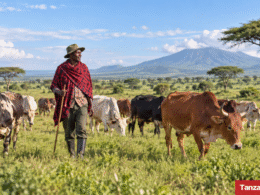

Tanzania’s meat exports experienced a dramatic increase from 1,774.3 tonnes in 2022 to 14,701.2 tonnes in 2023, according to Minister of Livestock and Fisheries Abdallah Ulega.
He credited the growth to the government’s revitalization efforts, including boosting the sector’s budget from TZS 32.1 billion (12.2 million USD) in 2021/2022 to TZS 112 billion (42.6 million USD) in 2023/2024.
Ulega made the comments during the launch of the World Bank’s “21st Tanzania Economic Update Report” in Dar es Salaam, Ulega emphasized the importance of developing infrastructure to improve livestock transportation for both domestic and international markets.

He also noted significant legal and regulatory reforms that have created a favorable business environment, facilitating livestock trade and private sector growth.
To further propel the livestock sector, the World Bank report advocates for additional public investment, incorporating climate-smart interventions to reduce methane emissions by 13% and increase protein production by 29% over six years.
It also recommend pursuing a series of policies and investments targeting productivity, trade and value addition, climate adaptation and mitigation, as well as sector governance with these resources.
For further details on the World Bank’s findings and recommendations for Tanzania’s livestock sector, please access the full report here.
Want to know more about Agriculture in Tanzania? Our free overview of the Tanzania Business and Investment Guide 2026 covers Agriculture, plus key sectors and investment opportunities. The complete 141-page edition includes policies, taxation, key regulations, full macroeconomic data, and sources, and is also available at no cost upon completion of a short form.
Download Free OverviewGet the Full Edition for Free